Not every scarf comes in a square or rectangular shape. Beyond these familiar forms, there is also a long and narrow type of scarf that many fashion enthusiasts refer to as a Twilly. With its compact size, this type of scarf is often used to tie around the neck, style the hair, or decorate handbags—adding a subtle yet refined accent to an outfit.
Small yet versatile, the Twilly has become a familiar accessory across many fashion styles for both men and women. So, what exactly is a Twilly? How did it emerge in fashion history, and why has this small scarf remained popular for decades? This article will explore its origins, design characteristics, and various ways to wear it.
1. What is a Twilly?
A Twilly is a long, narrow scarf typically used as a fashion accessory to tie around the neck, style hair, or decorate handbags. Originally, “Twilly” was the name of a specific scarf line introduced and trademarked by Hermès. However, due to its popularity, the term is now sometimes used more broadly to describe scarves with a similar shape and function.
Twilly scarves are characterized by their slim width and relatively long length, allowing for a wide variety of tying styles. This combination of compactness and flexibility has made the Twilly one of the most recognizable accessories in high fashion.
Unlike traditional square scarves that are often worn for coverage, a Twilly is designed to act as a refined accent. It can elevate a simple shirt, add detail to a hairstyle, bring new life to a familiar handbag, or even be used as a light belt or decorative element within an outfit.
2. The origin of the Twilly in fashion history
2.1 Twilly – A later addition to Hermès’ scarf collections
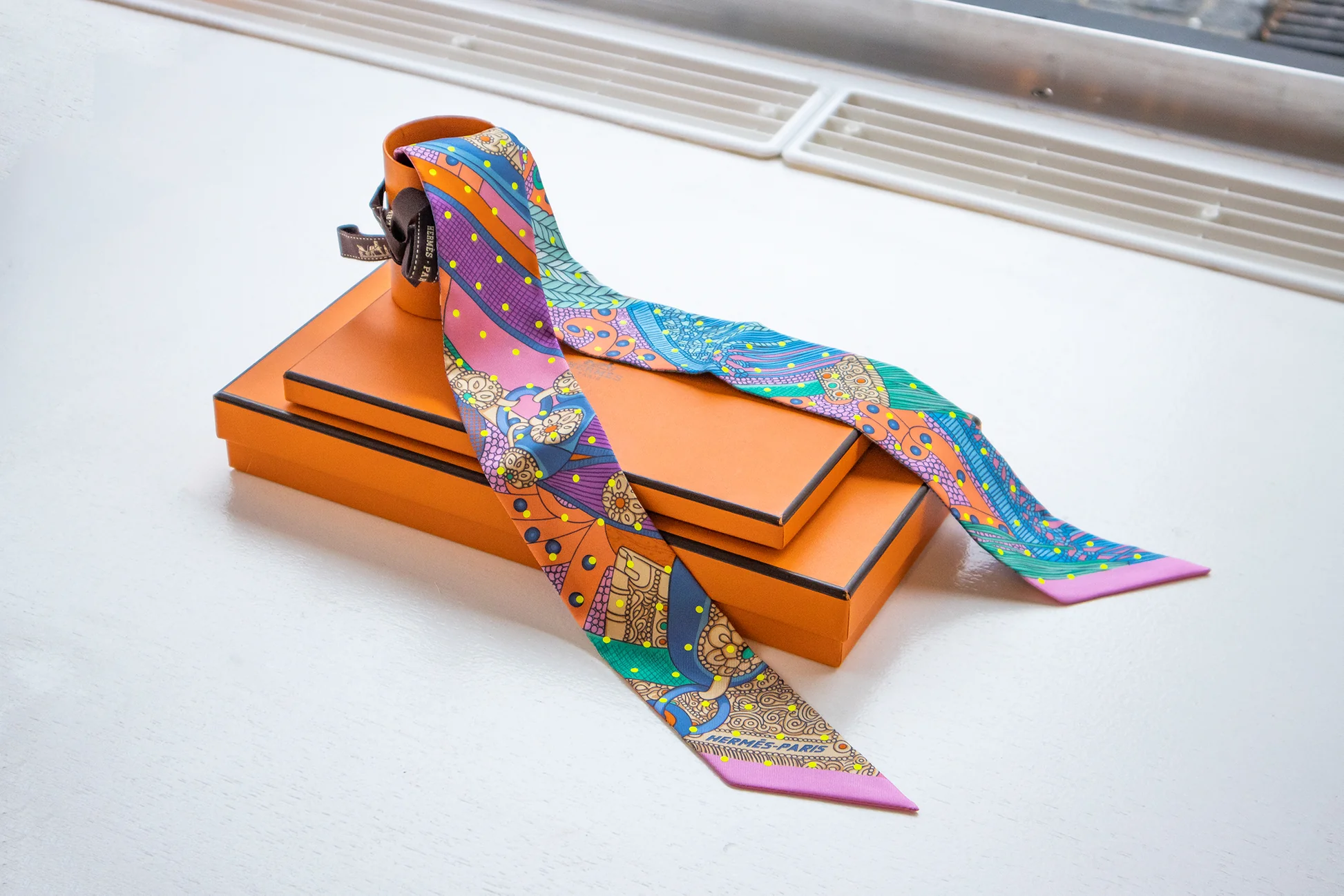
To understand Twilly, it is helpful to look at the history of scarves in high fashion. Since the mid-20th century, Hermès has been renowned for its silk carré (square scarves), crafted from silk and often featuring intricate prints—becoming a symbol of French elegance.
Building on this foundation, Hermès later introduced a more compact scarf design. This new format, defined by its long and narrow shape, allowed for more versatile styling. The brand named this line Twilly.
Thanks to its refined proportions and adaptability, Twilly quickly became a beloved accessory within Hermès collections.
2.2 From product name to widely used term
Although “Twilly” is a trademarked product line by Hermès, over time the term has become more widely used in fashion.
Today, in many fashion articles and magazines, “twilly” is sometimes used to describe long, narrow scarves with similar styling functions, even when they are produced by other brands.
Its widespread use reflects the influence of Hermès—not only in shaping products, but also in shaping the language of fashion itself.
3. Design characteristics of a Twilly scarf
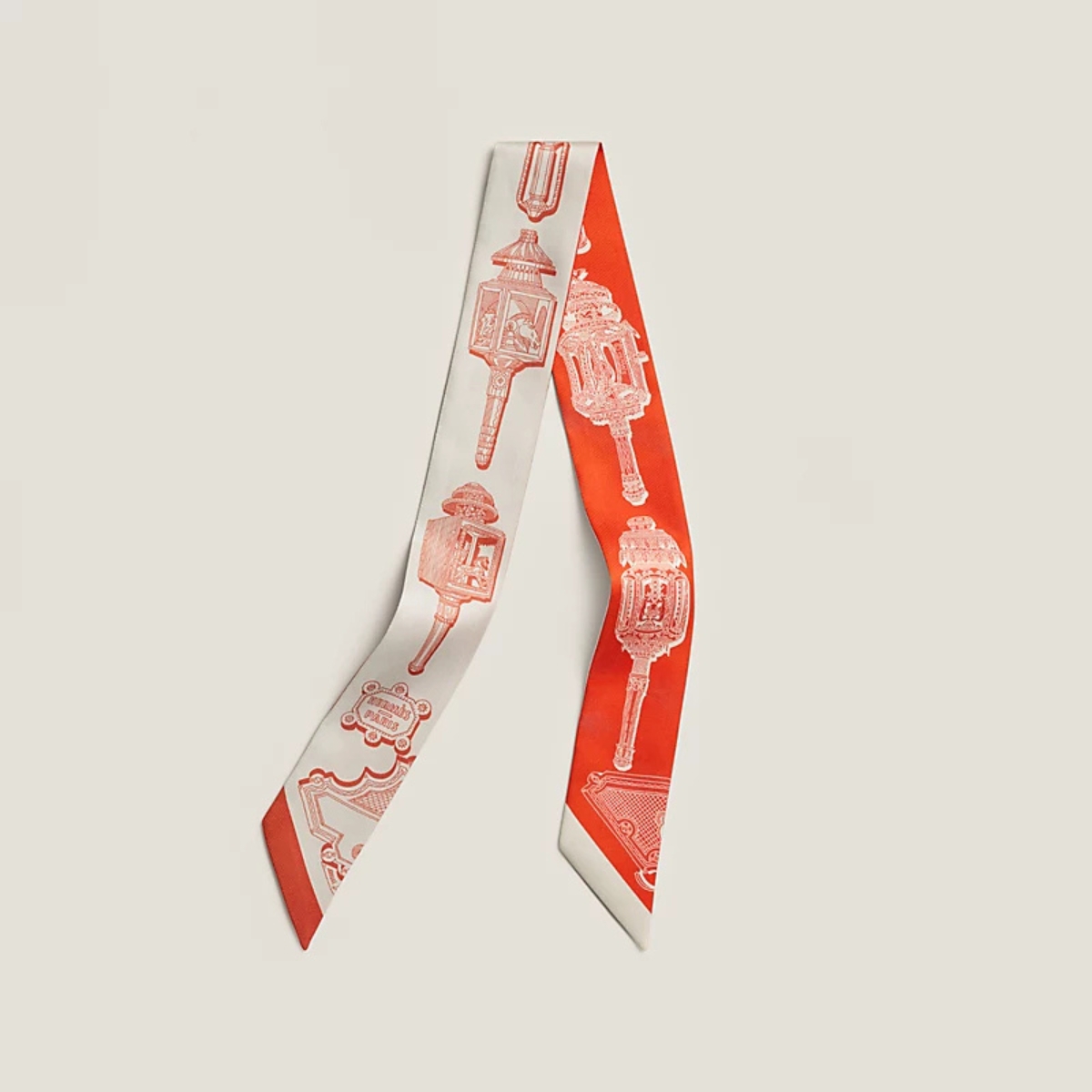
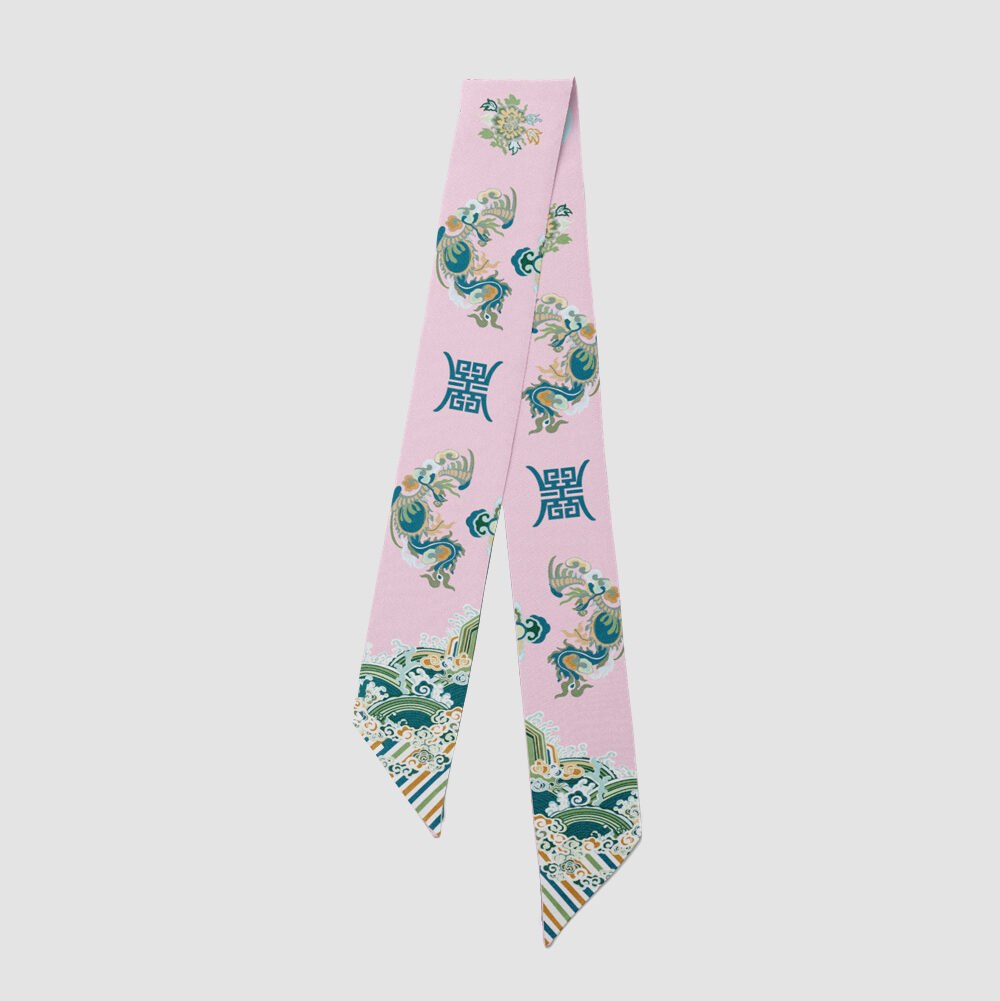
Twilly scarves have a distinctive design compared to other types of scarves. Instead of being large and square or rectangular, they are shaped like a long, narrow strip, similar to a ribbon.
This slim structure makes the Twilly more suitable as a decorative accessory, rather than a functional item for warmth.
3.1 Shape and size
A Twilly is defined by its elongated, narrow shape, making it easy to tie around the neck, hair, or handbag handles.
The ends of the scarf can be finished in different ways depending on the design. Some feature pointed or angled ends, creating a more fluid look when tied, while others have straight, neatly hemmed edges for a cleaner and more minimal appearance.
In terms of size, Twilly scarves come in various variations rather than a single standard. Within the “Twilly family” by Hermès, examples include:
- Doll Twilly: approximately 2 × 53 cm
- Standard Twilly: approximately 5 × 86 cm
- Twilly Twins: approximately 5 × 165 cm
- Twillon: approximately 3 × 193 cm
- Maxi Twilly: approximately 10–20 × 120–160 cm
Overall, Twilly-style scarves typically range from 2 to 10–20 cm in width and 50 cm to over 170 cm in length. This elongated proportion allows for multiple wraps or delicate knots while maintaining a light and refined appearance.
3.2 Materials
Twilly scarves are usually made from lightweight, soft fabrics with good drape, allowing them to be easily tied and styled.
In high-end products, they are typically crafted from silk, especially silk sourced from silkworm fibers, valued for its smooth texture and natural sheen.
However, in today’s market, many products labeled as “silk scarves” are actually made from synthetic fibers such as polyester, often woven using a satin weave to create a smooth, glossy surface that mimics silk.
In addition to fiber content, weaving structure also plays an important role. Two common weave types include:
- Twill weave: creates subtle diagonal lines, offering durability and better structure
- Satin weave: produces a smoother, shinier surface that enhances color and print
In many Twilly designs by Hermès, fabric is woven using twill from 100% silk, resulting in a fine diagonal texture—a hallmark of high-quality silk scarves.
In many Twilly designs by Hermès, fabric is woven using twill from 100% silk, resulting in a fine diagonal texture—a hallmark of high-quality silk scarves.
The name “Twilly” is also often associated with twill, referring to this distinctive weaving structure.
4. How to style a Twilly in everyday fashion
Thanks to its long and narrow design, a Twilly can be styled in a variety of ways in everyday outfits. Rather than serving a functional purpose like warmth, it is primarily used as a decorative accessory that adds subtle refinement to a look.
In fashion, Twilly scarves are commonly tied around the neck, worn in the hair, or used to decorate handbags. This versatility is what makes them a popular accessory across different styles.
4.1 Around the neck
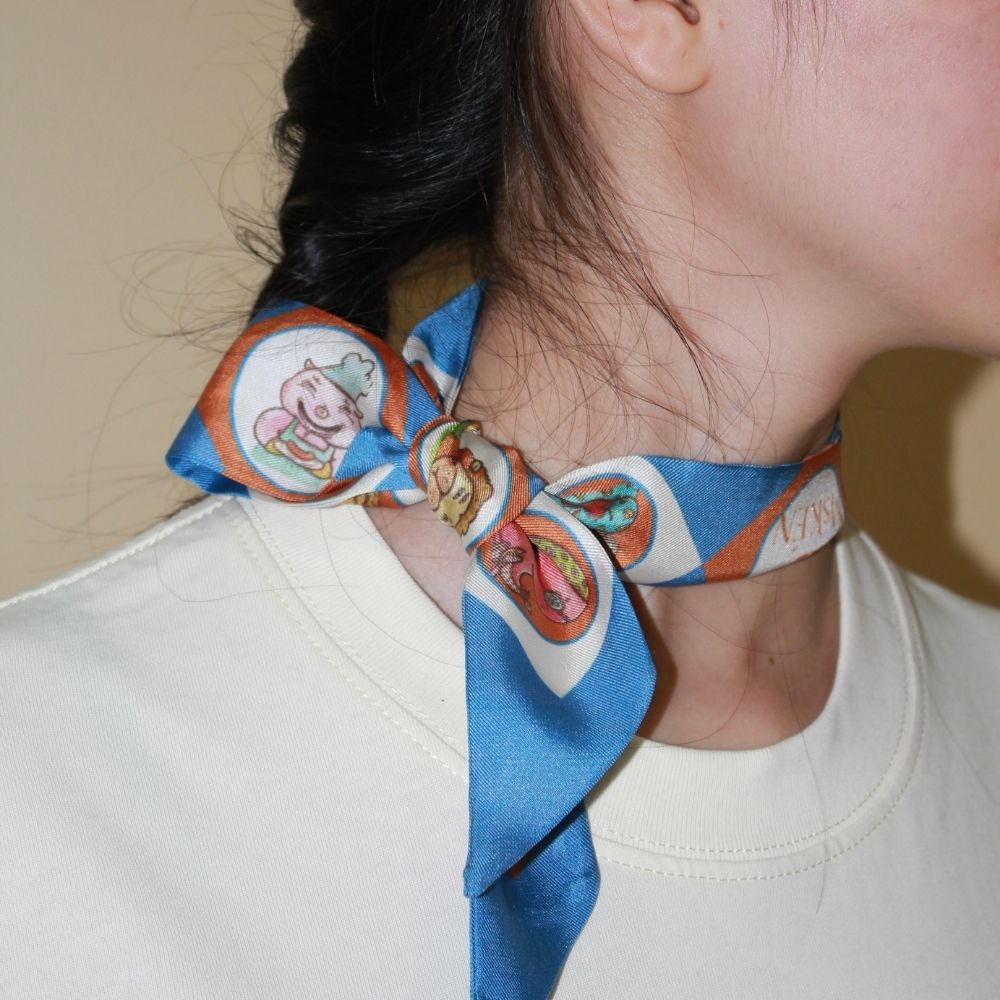
One of the most common ways to wear a Twilly is around the neck. Due to its compact size, it can be tied into a simple knot or wrapped lightly once to create a refined accent.
This styling approach often conveys a classic and elegant look, especially when paired with shirts, blazers, or outfits inspired by European fashion.

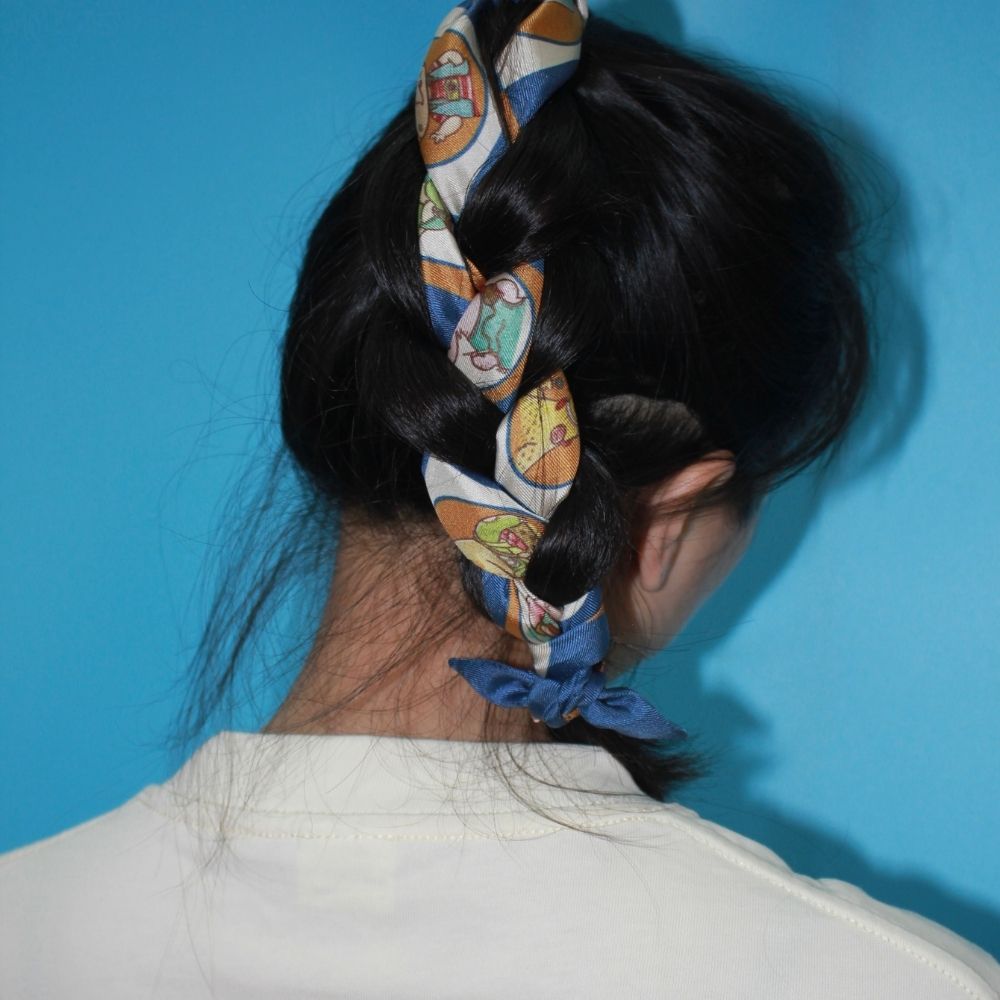
4.2 In the hair
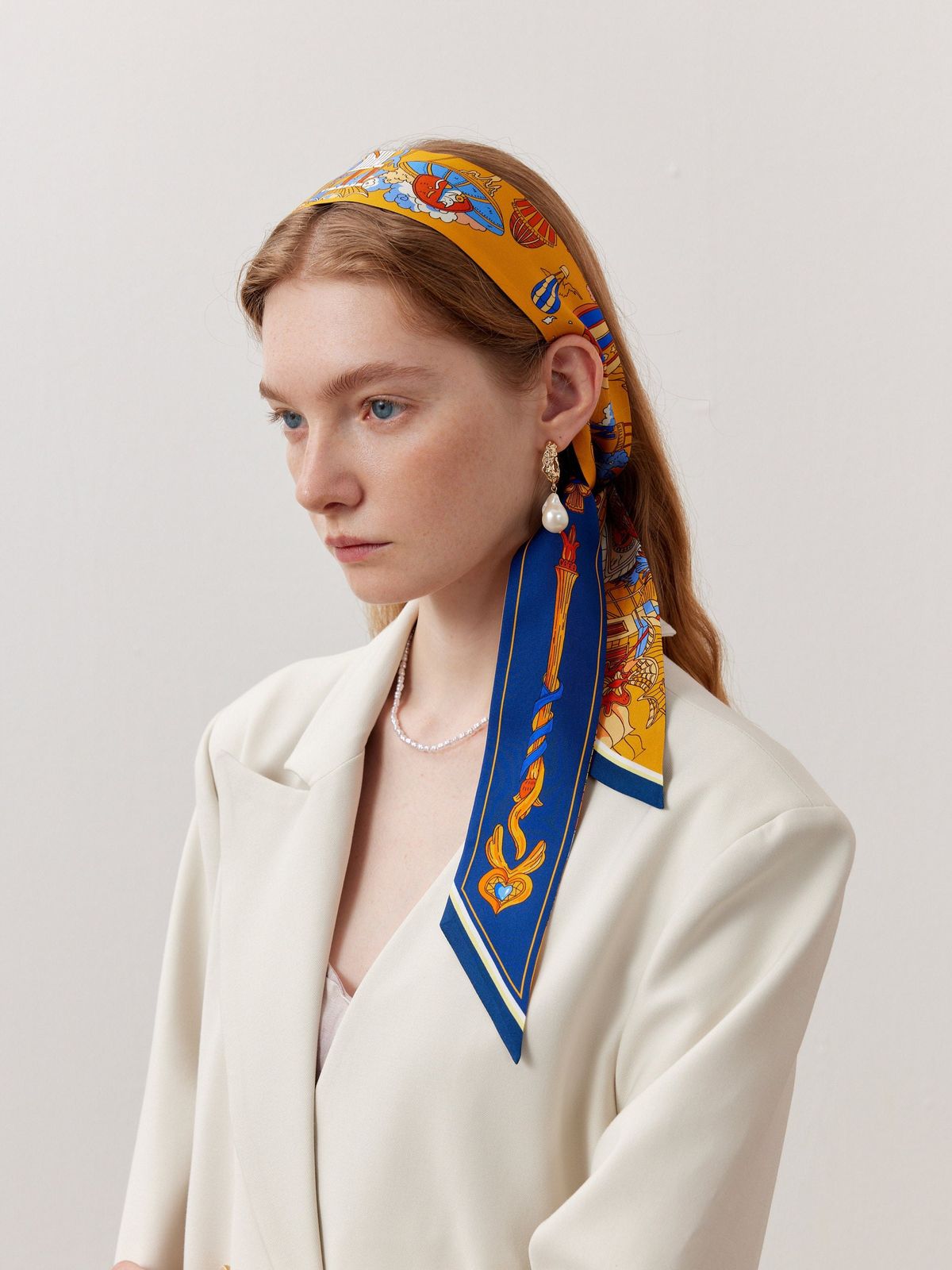
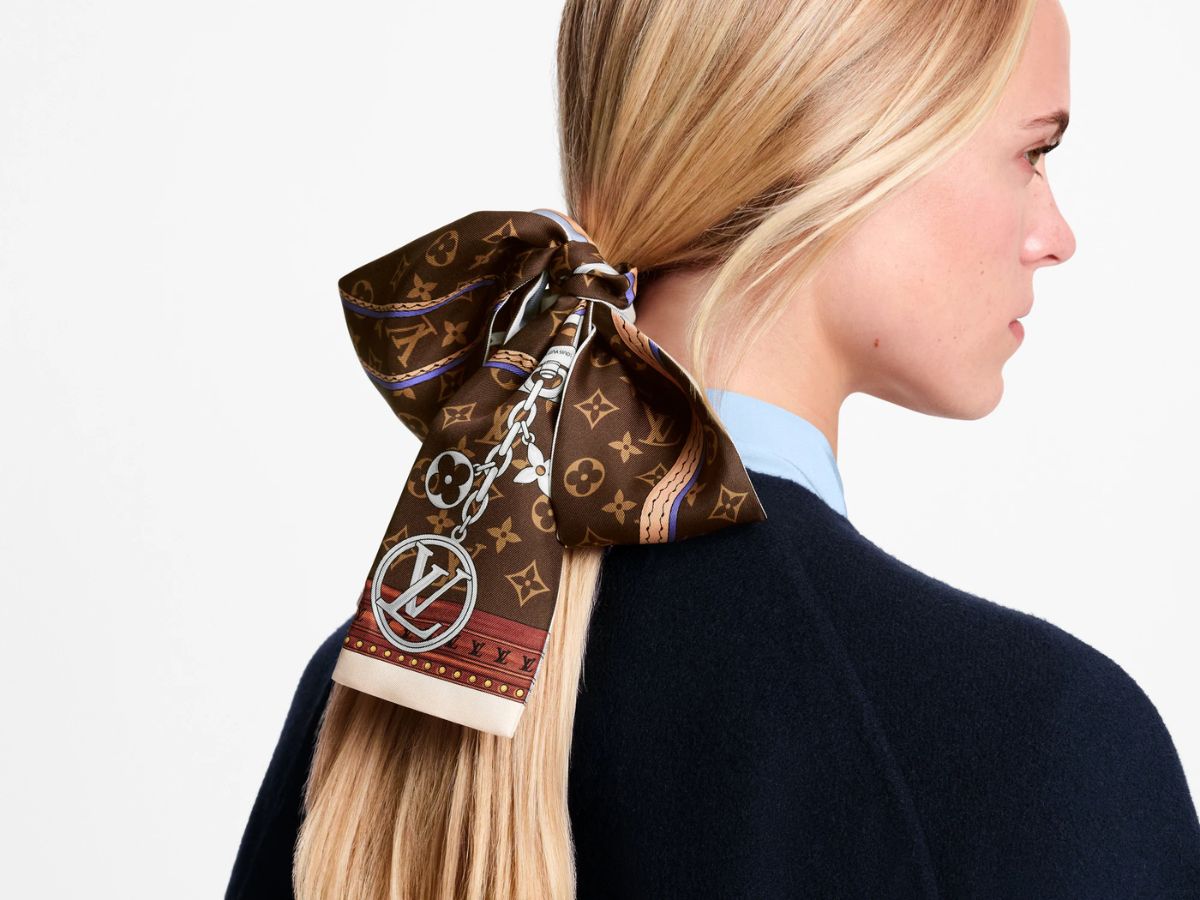
A Twilly is also widely used as a hair accessory. With its moderate length, it can be easily tied or wrapped around the hair to create a soft, decorative detail.
Common styling methods include:
- As a headband: wrapped around the head for a neat and feminine look
- Tied into a ponytail: wrapped around a hair tie or tied directly into the hair for a more dynamic and fluid effect
These styles often create a youthful, effortless, and natural feel, suitable for various outfits.
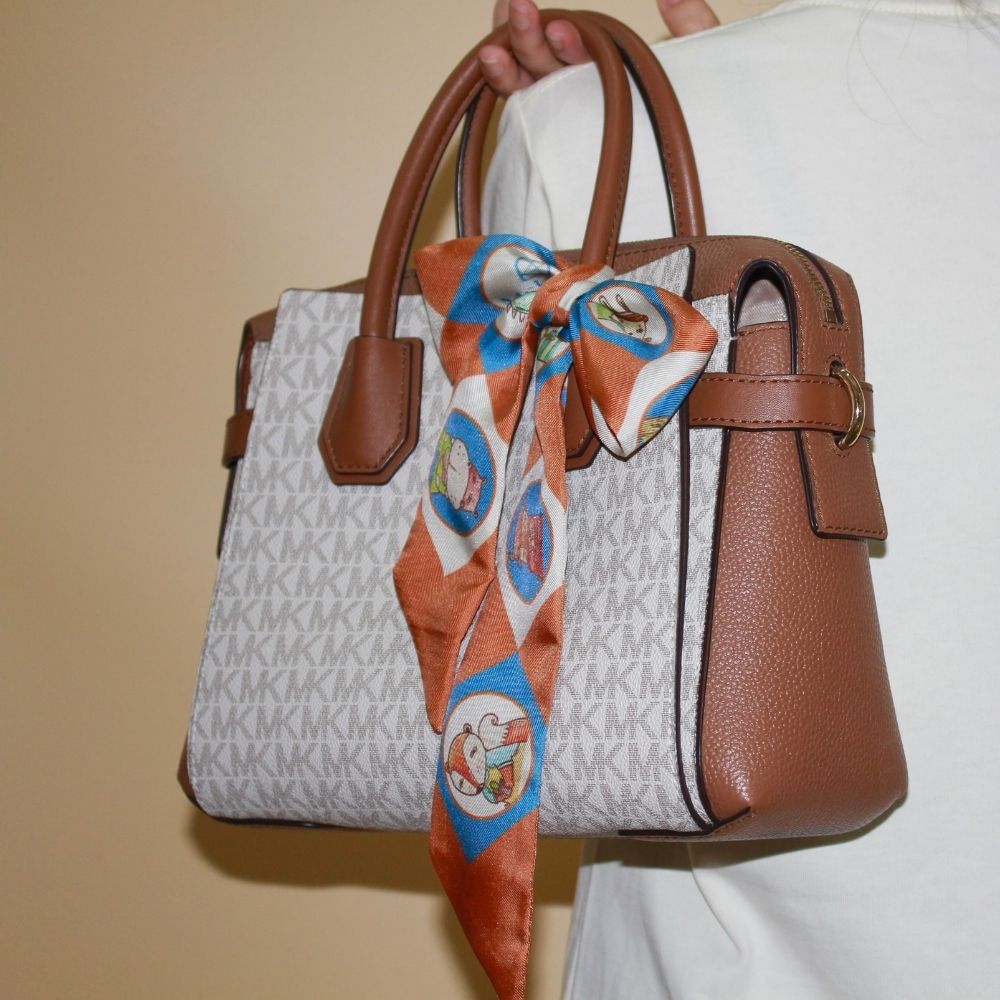
4.3 Decorating handbags
Beyond clothing, Twilly scarves are frequently used to decorate handbags. They can be tied into a bow on the handle or wrapped along the strap.
This is one of the most popular uses of Twilly in high fashion. A simple addition of a narrow scarf can transform the appearance of a bag, adding color, texture, and personality.
4.4 As a wrist or belt accessory
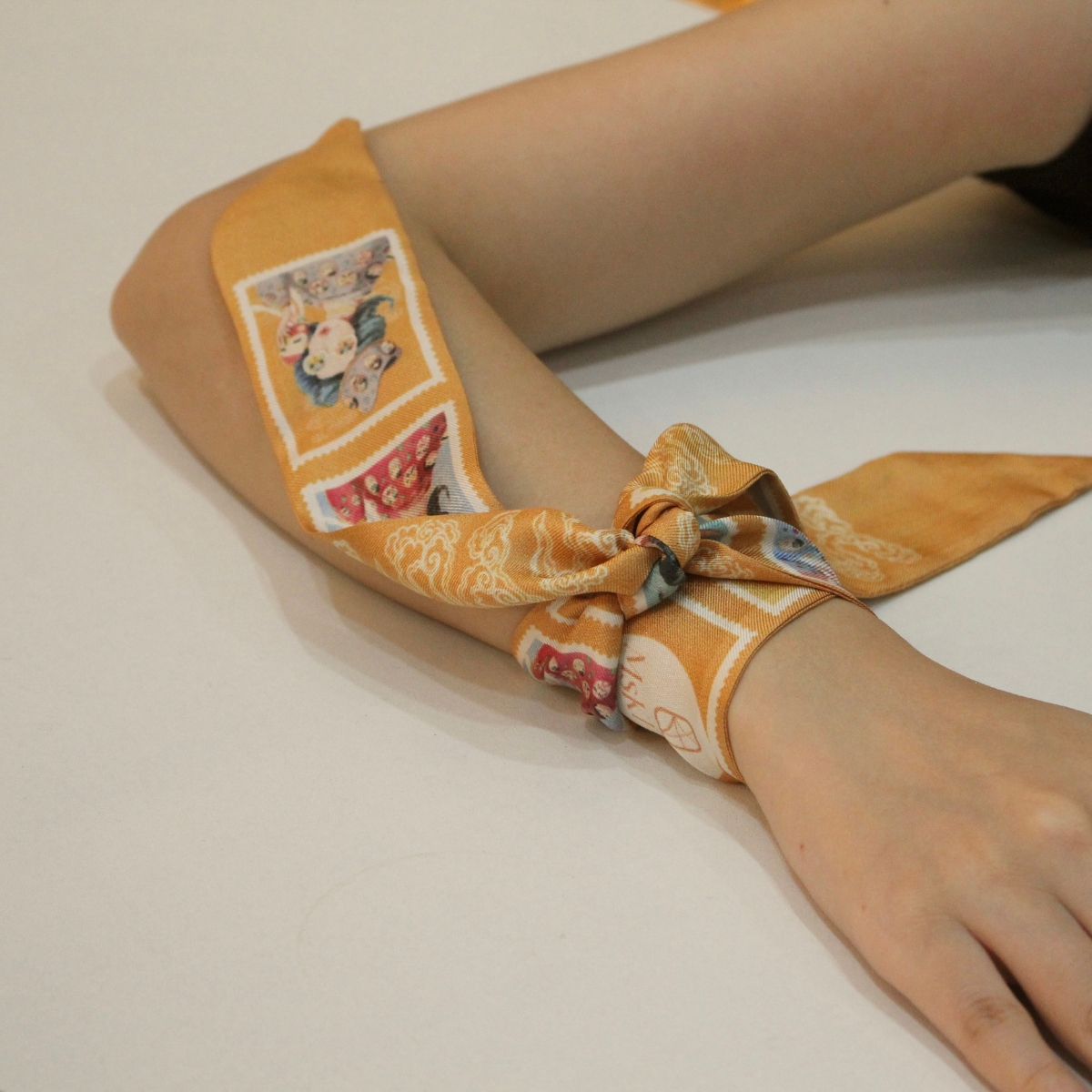
In addition to the neck, hair, and bags, a Twilly can also be styled as a wrist accessory or a light belt.
It can be wrapped around the wrist like a soft bracelet, paired with a watch, or threaded through belt loops as a slim belt. This creates an interesting detail, especially in minimalist outfits.

5. Why Twilly has become a popular fashion accessory
Despite its small size, the Twilly remains a widely appreciated fashion accessory. For decades, this scarf format has appeared consistently in collections by Hermès and other fashion houses.
5.1 Versatility in styling
One of the key reasons for its popularity is its versatility. Its long and narrow shape allows it to be tied and styled in multiple ways.
From neckwear to hair accessory, handbag detail, or even wrist and belt styling, a single Twilly can transform into different elements within an outfit—without requiring a complete wardrobe change.
5.2 Ability to create subtle accents
Twilly scarves function as a refined visual accent. Their compact size allows them to introduce color, pattern, or texture without overwhelming the outfit.
For example, a simple white shirt or a minimal outfit can feel more dynamic when paired with a patterned Twilly. This makes it an effective yet understated way to refresh personal style.
5.3 A symbol of European elegance
Twilly is closely associated with European elegance, particularly French style. In many collections by Hermès, the Twilly is used to create a look that is refined without being excessive.
With its silk material, detailed prints, and slender proportions, the Twilly reflects a timeless sense of sophistication—allowing it to remain relevant across changing fashion trends.
6. Comparing Twilly with other types of scarves
In fashion, scarves come in many different shapes, each suited to different uses. The table below highlights how Twilly compares to other common scarf types.
| Type of scarf | Shape | Typical size | Main use | Key characteristic |
|---|---|---|---|---|
| Twilly | Long and narrow | ~2–10(20) cm × 50–170+ cm | Neck, hair, bag decoration | Compact, flexible, accent-focused |
| Square scarf | Square | 45×45 cm to 140×140 cm | Neckwear, headscarf, styling | Versatile, foldable in many ways |
| Rectangular scarf | Rectangle | Larger and wider | Neck, shoulders | Can provide warmth, layering |
| Diamond scarf | Diamond | Wider center, pointed ends | Neckwear | Soft drape, fluid look |
| Triangle scarf | Triangle | Covers neck/shoulders | Neck, shawl | Strong visual shape |
7. Similar narrow silk scarves from fashion brands
The long and narrow scarf design is not limited to Twilly by Hermès. Many fashion houses have developed similar designs under different names.
- Mitzah scarf – Dior
- Bandeau – Louis Vuitton
- Silk bandeau – Chanel
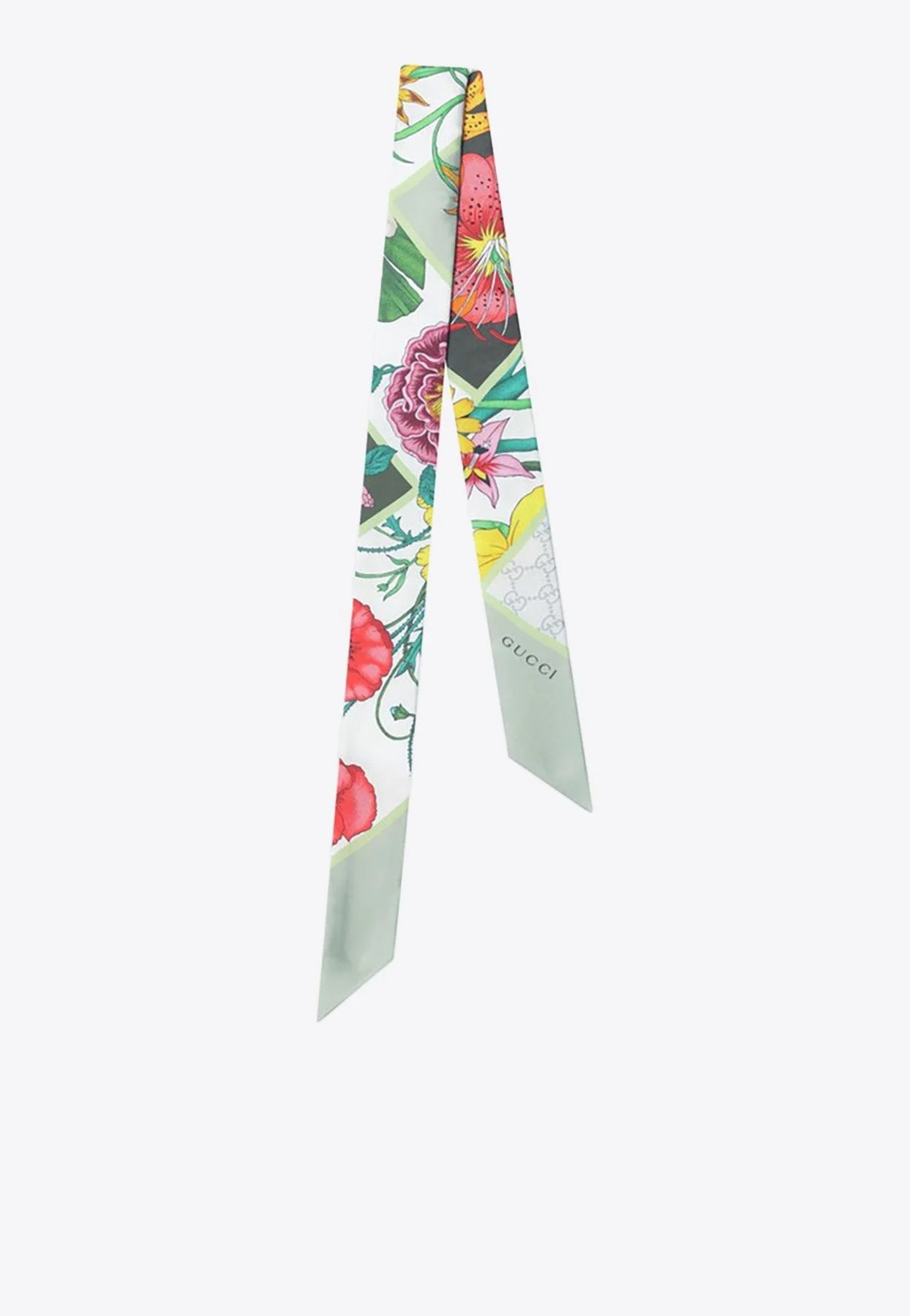
- Silk bandeau – Gucci
Despite differences in naming and design details, these scarves share a common characteristic: a slim, ribbon-like form used as a styling accent.
Their presence across multiple luxury brands highlights that this format is not just a single product, but a recognized accessory category in high fashion.
8. Ribbonie – a silk scarf line by MsKÉN inspired by Twilly
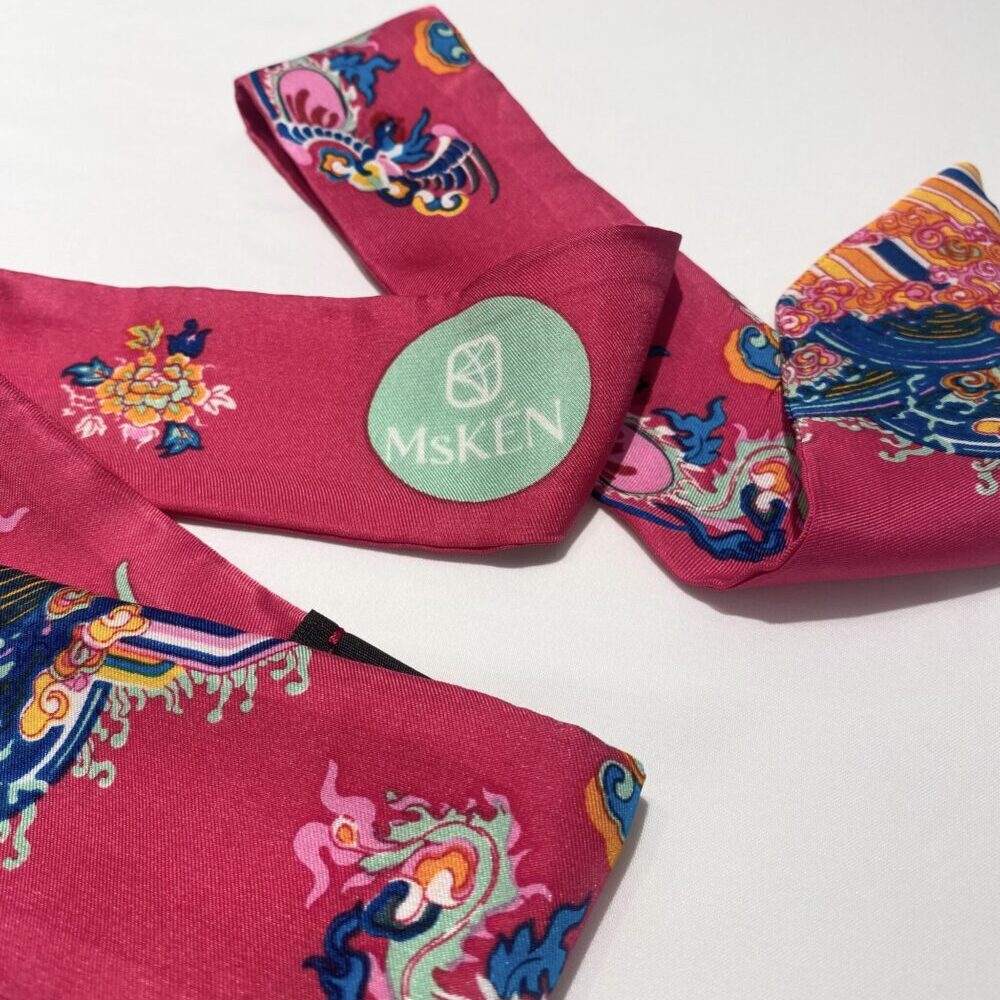
Inspired by the long and narrow scarves seen in high fashion—such as Twilly by Hermès or Mitzah by Dior—MsKÉN developed the Ribbonie line.
Ribbonie is crafted from silk and follows a similar elongated, narrow structure, while adapting it to modern everyday use. It retains the elegance of traditional silk scarves while offering greater flexibility in styling.
Ribbonie sizes:
- Lili Ribbonie (2 × 53 cm): compact, suitable for hair or wrist
- Ribbonie (5 × 86 cm): standard size, similar to Twilly
- Duo Ribbonie (5 × 172 cm): longer for more styling variations
- Grande Ribbonie (10 × 120 cm): wider, can be used as a statement piece or light belt
This range of sizes allows Ribbonie to adapt to different styling needs and personal preferences.


View more: MsKÉN’s Ribbonie scarves (twilly scarves)
9. How to choose the right Twilly
9.1 By material
- Silk: soft, lightweight, elegant
- Synthetic fabrics: easier to maintain, more affordable
Silk is generally preferred for its texture and overall experience.
9.2 By color
- Neutral tones: versatile and easy to match
- Bold colors: create visual highlights
- Contrast: enhances visual impact
9.3 By pattern
- Simple patterns: suitable for daily wear
- Artistic or complex designs: statement pieces
- Brand-specific motifs: identity and personality

10. Frequently asked questions
How long is a Twilly?
Typically around 5 × 86 cm, but can range from 50 cm to over 170 cm in length.
Is a Twilly always made of silk?
Not always. While high-end versions are usually silk, many products on the market are made from polyester.
Can Twilly be used on handbags?
Yes. This is one of the most common and popular uses.

Conclusion
The Twilly is a unique fashion accessory—small in size yet capable of creating subtle transformations within an outfit. Its presence across multiple luxury brands shows that it is not a passing trend, but a well-established category in modern fashion.
From this foundation, designs like Ribbonie by MsKÉN demonstrate how a classic concept can be adapted for contemporary lifestyles. While inheriting the elegance of narrow silk scarves, Ribbonie expands their versatility for everyday styling.
Ultimately, the value of a Twilly does not lie in its size or label, but in how it is worn. A small scarf, when thoughtfully chosen and styled, can become the most refined detail of an entire outfit.