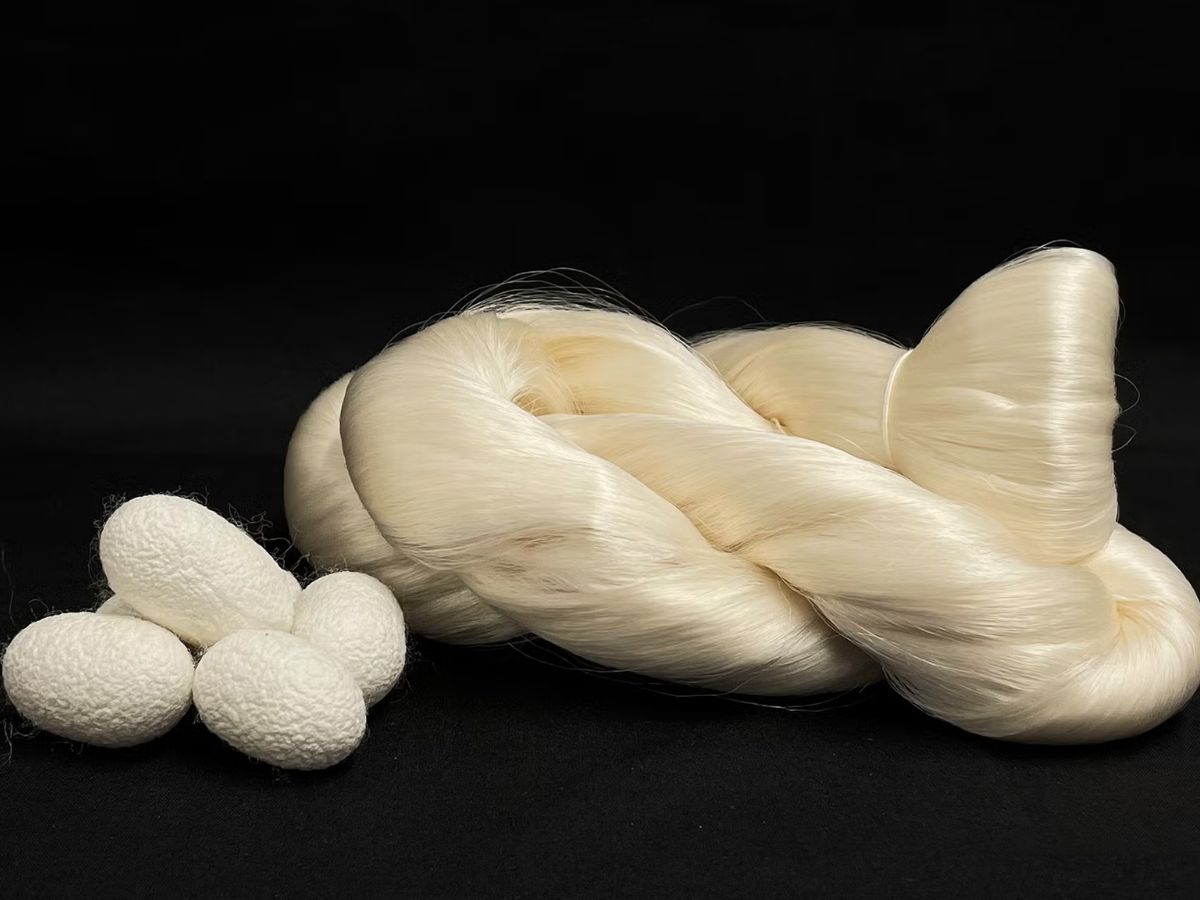
Silk has been called the “queen of fabrics” for a long time and that’s not a title the industry gave itself. It’s a recognition, earned over centuries, of what makes silk genuinely different from everything else: a natural sheen and softness that no other material has quite managed to replicate. But that quality comes with a price tag that often catches people off guard. So what exactly is driving that price? Here’s a closer look at the real reasons why silk consistently costs more than most other fabrics on the market.
The sheer number of cocoons it takes
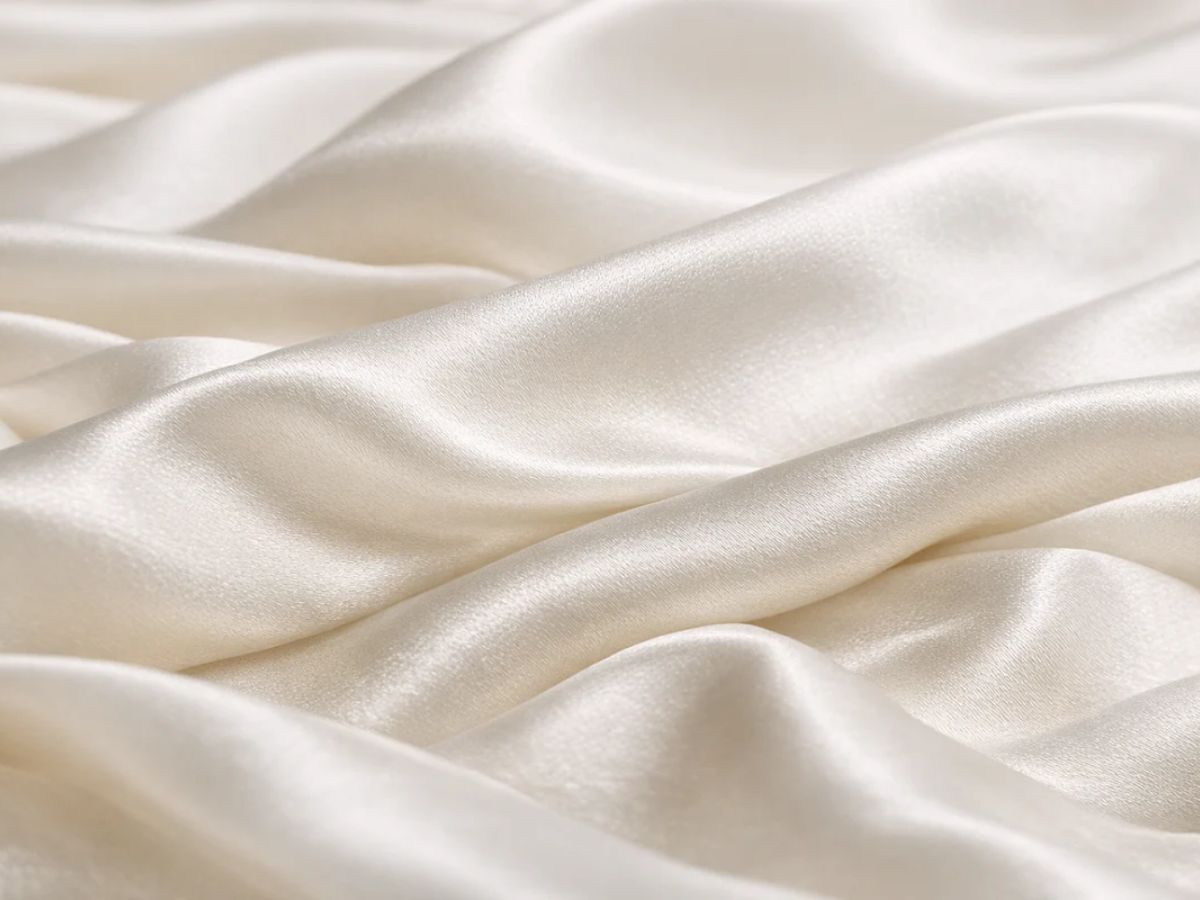
The clearest way to understand silk’s cost is to start with the raw numbers. Getting just 1 kilogram of raw silk requires around 8 kilograms of fresh cocoons, roughly 5000 of them. And that’s still just the raw material, not a finished product.
Weaving a single meter of standard silk fabric takes somewhere between 500 and 900 cocoons. For heavier, higher-grade silk, that number can climb to 2000 or even 3000 cocoons per meter. Each one of those cocoons is the result of weeks of careful, continuous tending. So before a single piece of fabric is even woven, the input cost is already in a completely different league from anything produced industrially.

Silkworms are demanding to raise
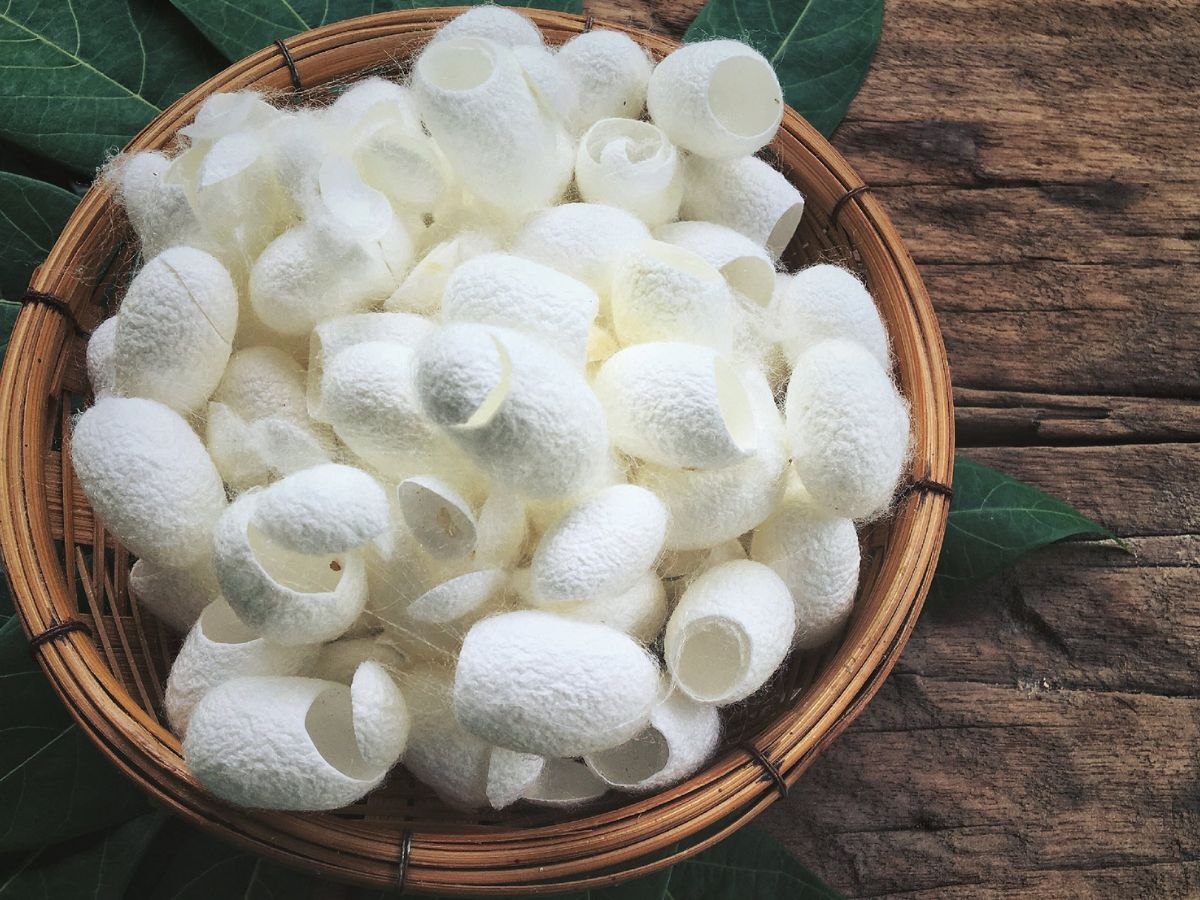
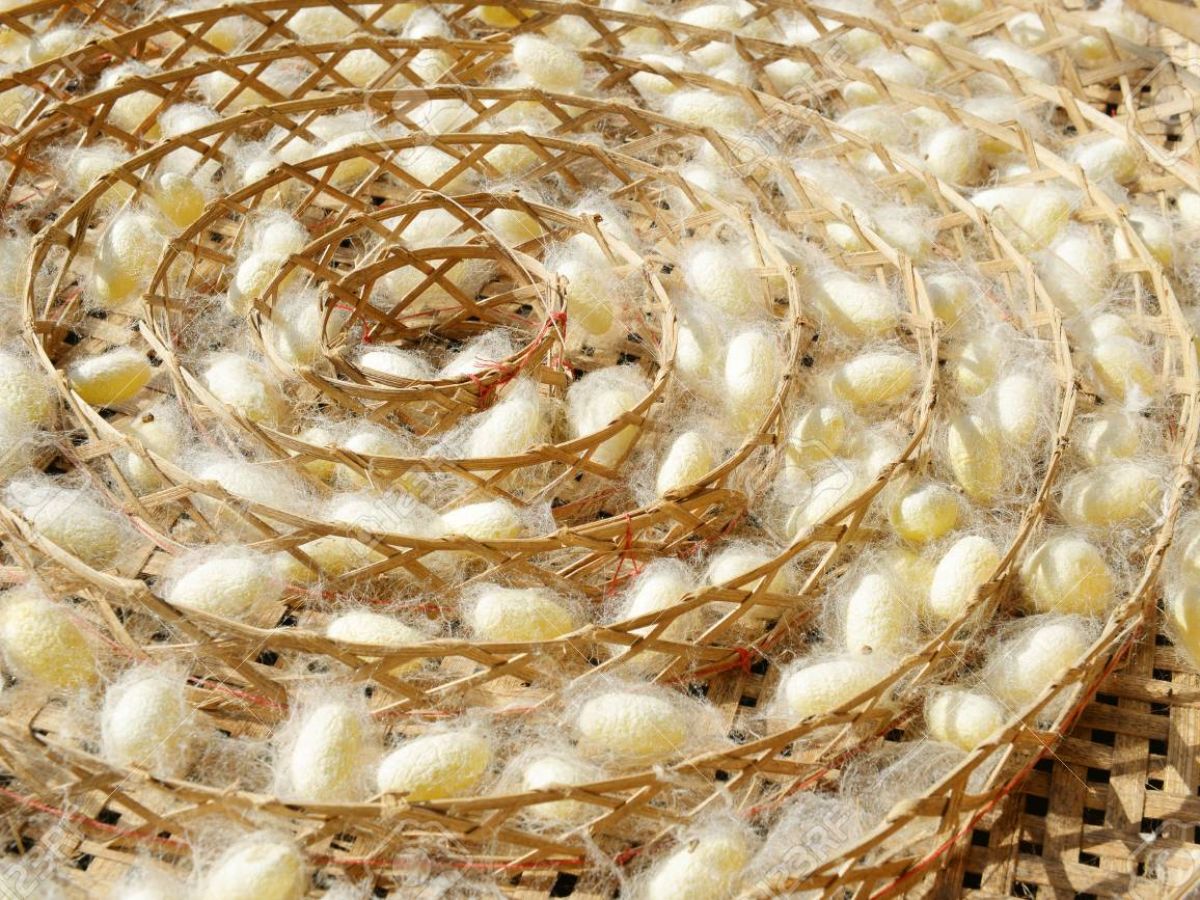
An old Vietnamese saying that goes something like: “Raising pigs, you can eat sitting down; raising silkworms, you eat standing up.” It’s a compact way of capturing just how relentless silkworm farming actually is. Silkworms eat day and night continuously, which means farmers need a constant supply of fresh mulberry leaves on hand. That’s why silkworm farming and mulberry cultivation are inseparable; most farmers who raise silkworms have to grow their own mulberry trees just to keep up.
Beyond the feeding demands, silkworms are extraordinarily sensitive to their environment. Temperature, humidity, and cleanliness all need to be tightly controlled. A room that’s too warm, too cool, or not clean enough can compromise an entire batch.
The timing is also unforgiving. Silkworms only spin their cocoons over a window of about three to four days. After that, the chrysalis inside goes quiet for another six to seven days and that’s the window farmers have to reel the silk. Once the chrysalis hatches and cuts through the cocoon, the thread is broken and the cocoon is unusable. Miss that window, and weeks of work are lost.
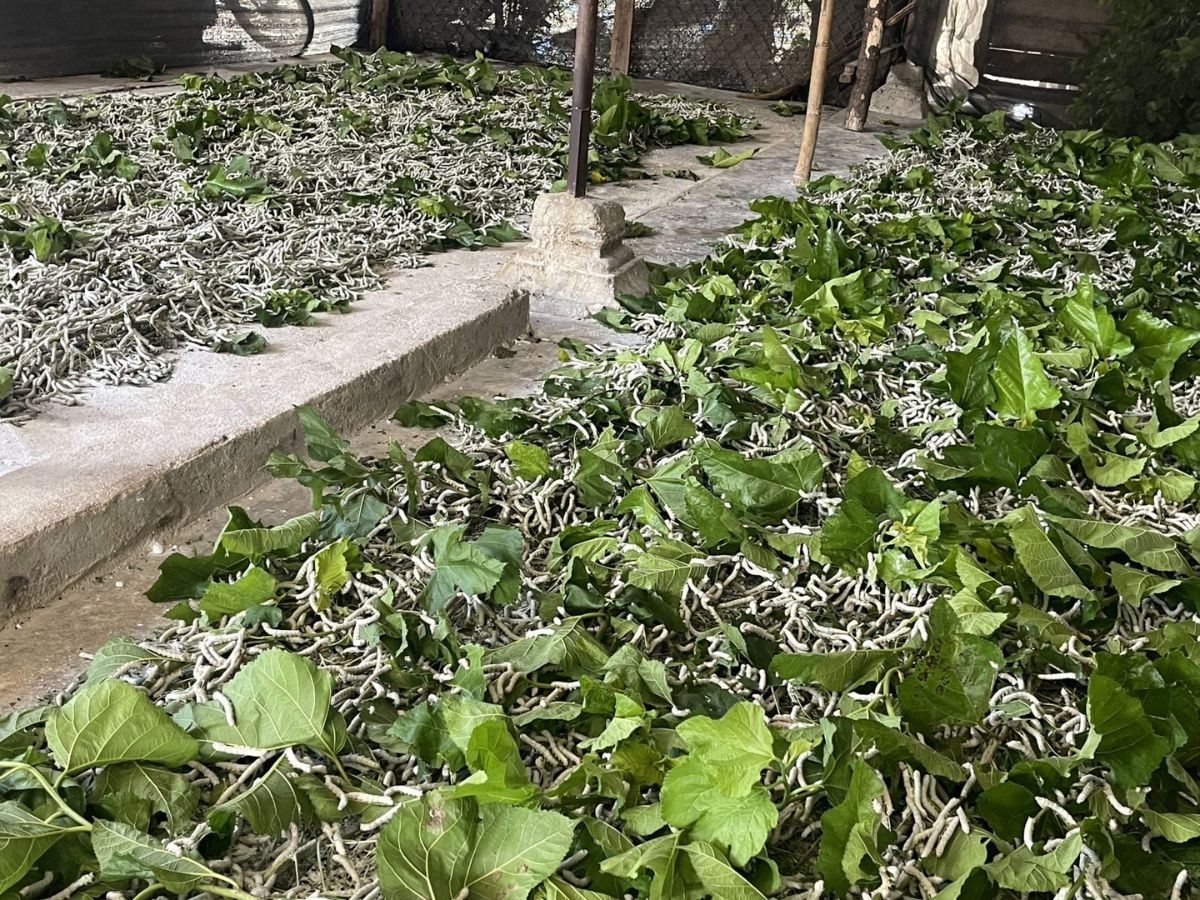
Silk quality is also tied to something that rarely gets mentioned: the time of year. The best cocoons are typically harvested in spring, around March and April, and again in autumn, from September through November. These are the cooler, drier seasons, and the silk produced during these months is consistently higher quality than what comes out of summer harvests. It’s one of the reasons Bao Loc in the Central Highlands has become Vietnam’s de facto silk capital, its climate stays cool and stable year-round, which means consistently good-quality silk in every season.
All of the controlled environment, the around-the-clock care, and the narrow harvesting window add up to a significant investment that most people never see reflected in the price tag.
Almost everything is done by hand
Most natural and synthetic fibers can be harvested and processed with machinery. Silk can’t, at least not without sacrificing quality. Reeling the thread from a cocoon, spinning it into yarn, weaving it into fabric, dyeing it, finishing it – each step requires skilled hands, and none of them can be fully automated without losing what makes silk worth buying in the first place.
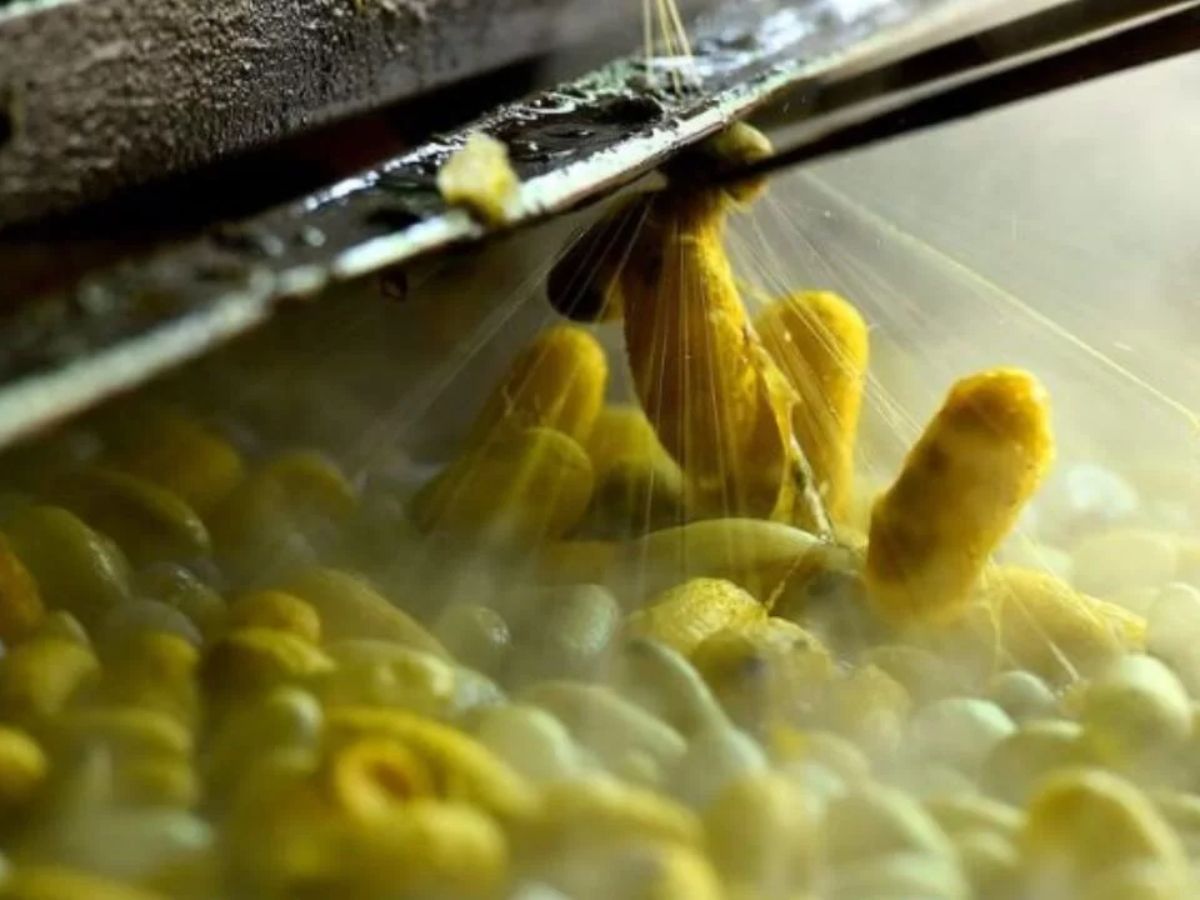
That hands-on requirement means silk production can’t be scaled up the way industrial fabrics can. Supply stays limited, globally, almost by definition. And limited supply with consistent demand means the price stays high, not because of branding or markup, but because of what it actually takes to make the thing.
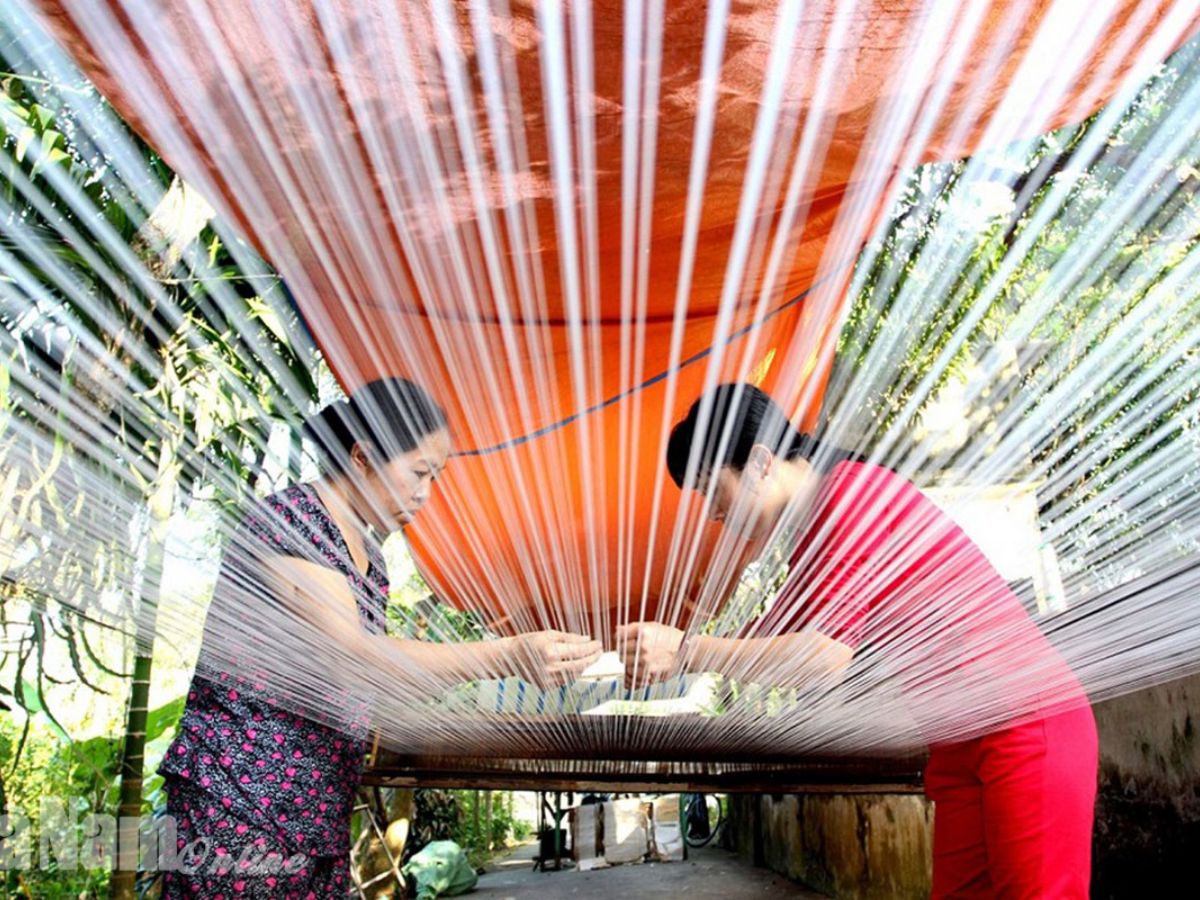
There aren’t many people left who know how to do this
Even though silk products are still widely loved, the people who make them aren’t being compensated in a way that reflects what the work actually involves. Handweaving is slow and labor-intensive, cheap industrial fabrics have taken market share, and most consumers can’t reliably tell real silk from a blended imitation, so traditional weavers are increasingly squeezed out, unable to price their work at what it’s genuinely worth.
At the same time, younger generations are less drawn to trades that take years to learn and don’t pay well at the start. The people who currently hold the skills are mostly older artisans, and as that generation ages without enough younger people stepping in to replace them, high-quality silk production is going to become even scarcer.
This isn’t just an economic problem. It’s the slow erosion of a craft tradition that Vietnam has carried forward for thousands of years. Once the knowledge isn’t being passed on anymore, it doesn’t come back easily.