Silk fabric has been used in fashion, clothing, and interior decoration for a long time because of its soft texture, beautiful drape, and natural shine.
However, when looking for silk products on the market, you may see many names such as satin silk, habutai, crepe, twill, organza, chiffon, and taffeta. Each type has a different weave structure, thickness, shine, and feel.
Understanding the different types of silk fabric can help buyers choose the right material for their needs. It can also help them avoid confusing pure silk with blended or synthetic fabrics that look similar to silk.
What is silk fabric?
Silk fabric is made from fibers produced by silkworms when they form their cocoons.
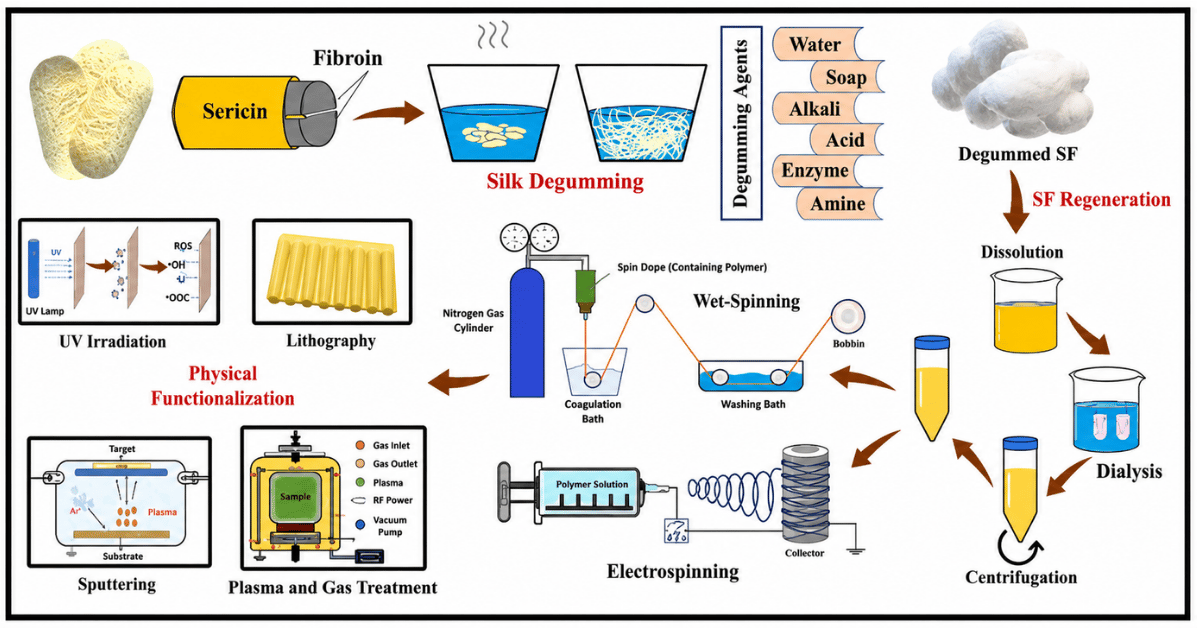
In traditional silk production, the most commonly used silkworm is Bombyx mori, which is usually fed with mulberry leaves. According to the Food and Agriculture Organization of the United Nations, FAO, silk fibers in the cocoon mainly contain a fibroin core surrounded by sericin. These are two important proteins that form the natural structure of silk.
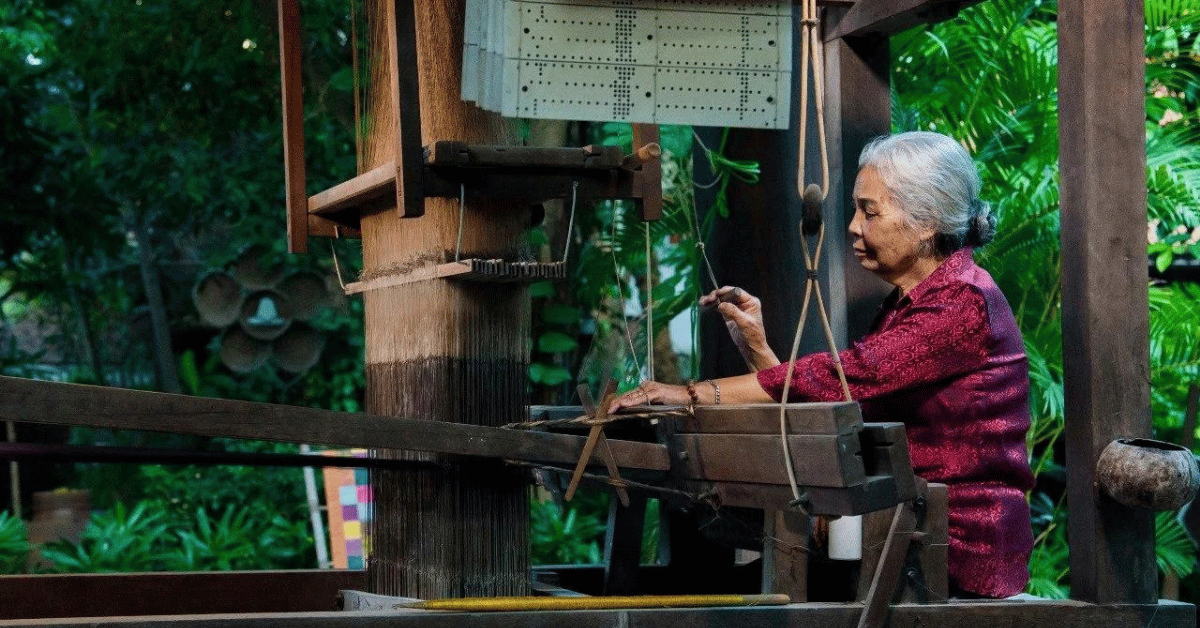
After the cocoons are collected, the silk fibers are reeled from the cocoons, processed, twisted into yarn, and then woven into fabric. Depending on the weaving method, yarn twist, fabric density, and finishing process, the final product can become satin, habutai, crepe, twill, or other types of fabric.
Therefore, when talking about silk fabric, it is important to understand the difference between the fiber material and the fabric structure. Silk refers to the fiber material, while satin, twill, chiffon, and organza usually refer to the weaving method or structure of the finished fabric.
How is silk produced?
The silk making process begins when silkworms reach the stage where they start forming cocoons.
Silkworms produce a liquid protein from their silk glands. When this material comes into contact with air, it becomes solid and forms a fiber. The silkworm then wraps this fiber around its body many times to create a cocoon.
According to FAO, fibroin forms the main core of the silk fiber, while sericin acts as a natural glue that surrounds and connects the fibers inside the cocoon. Fibroin makes up most of the fiber structure, while sericin accounts for a smaller part.
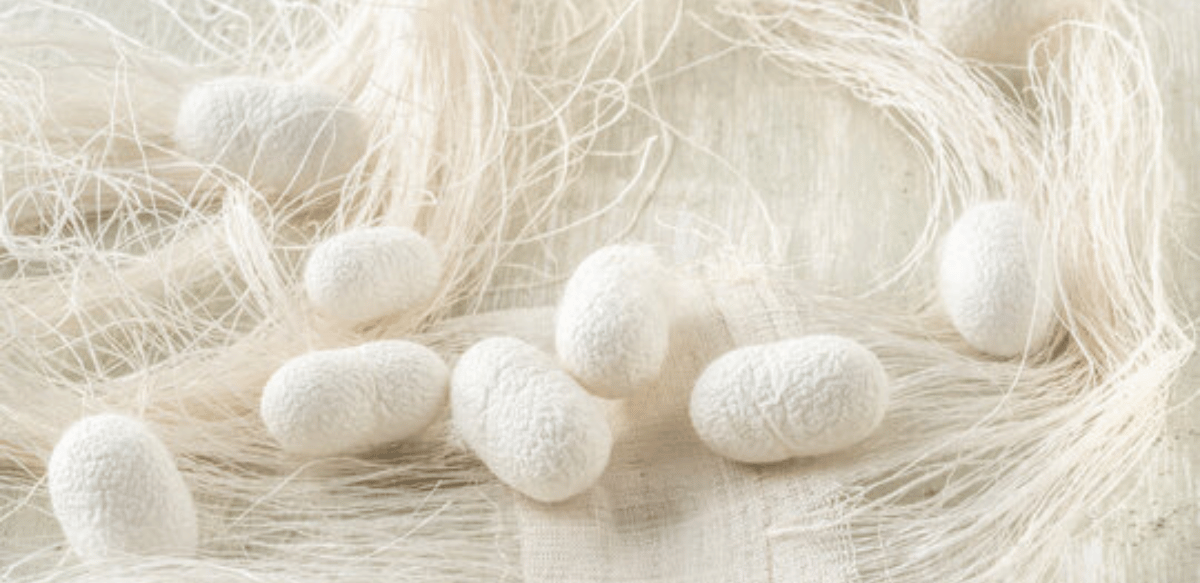
After harvesting, the cocoons are usually treated with heat and water to soften the sericin. This makes it easier for producers to reel a continuous silk filament from the cocoon.
At this stage, the silk fibers are very thin. They are then combined, twisted, and processed to achieve the required strength before being placed on a loom.
The next steps depend on the type of fabric being produced. Even when the same silk material is used, different arrangements of warp and weft yarns can create very different fabric surfaces.
Main characteristics of silk fabric
One of the easiest ways to recognize silk fabric is its soft surface and natural shine. However, the level of shine also depends on the weaving method. For example, satin silk usually has a stronger shine than crepe or silk noil fabric.
Silk fibers are very fine, allowing the fabric to feel very soft while still maintaining relatively good strength. Fibroin is the main component of silk fiber, and glycine and alanine make up a significant part of this protein structure.
Silk can also absorb moisture and often feels comfortable against the skin. When used for clothing, it can create a natural drape and softer movement compared with fabrics that have a stiffer structure.
However, not all silk fabrics are equally soft or shiny. Organza and taffeta usually have a stiffer structure, while chiffon and satin have more drape. This is why both the fiber material and the weaving method should be considered when choosing silk fabric.
Why is silk fabric popular?
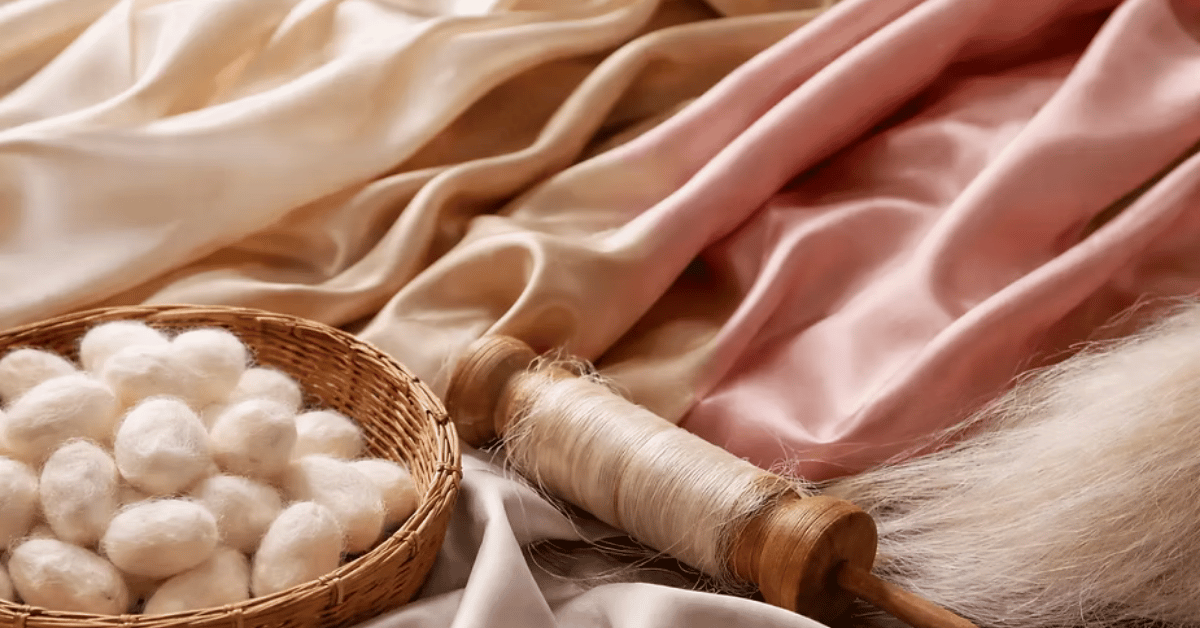
One of the main reasons high quality silk fabric is popular is its soft, smooth, and lightweight feel against the skin.
Because of the natural characteristics of silk fibers and suitable weaving techniques, the fabric often feels comfortable and has a soft drape. This makes it suitable for many types of clothing that are worn directly on the body.
Drape is another important advantage. Fabrics such as satin, habutai, and chiffon can create a natural flow, making them suitable for dresses, áo dài, shirts, scarves, and other fashion designs that require soft movement.
Different weaving methods also create different appearances. Satin can be chosen when a shiny surface is needed. Crepe is suitable for people who prefer a more matte surface. Twill provides a clearer structure, while organza is suitable when the design needs to hold its shape.
This variety allows silk to work well with many different styles instead of being limited to only one type of clothing.
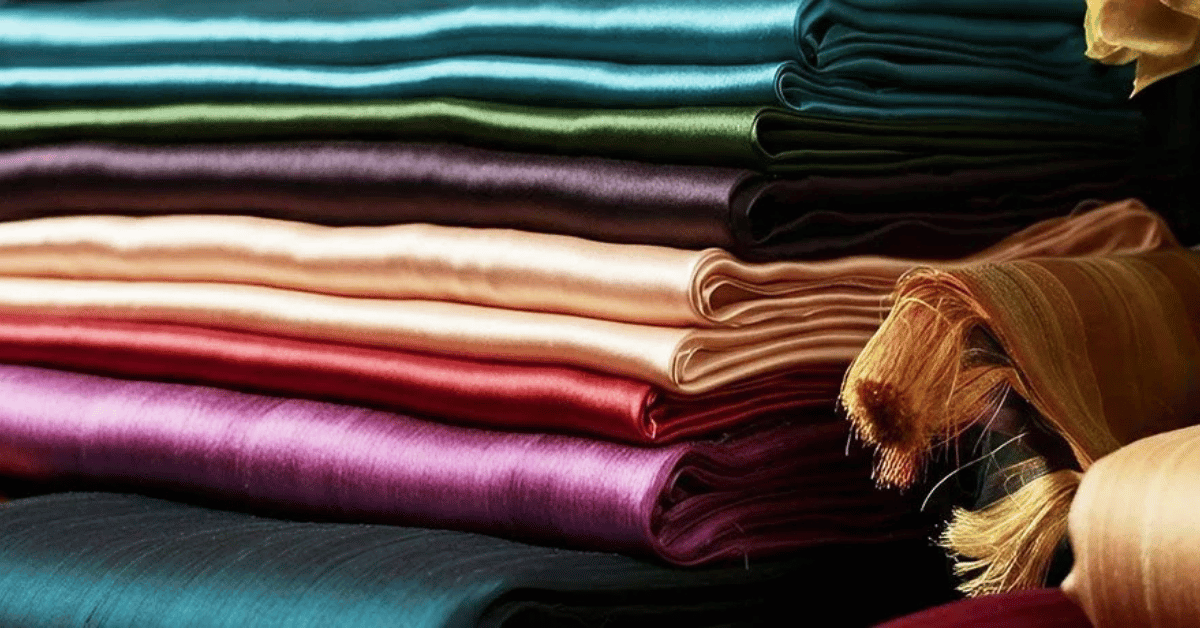
Popular types of silk fabric today
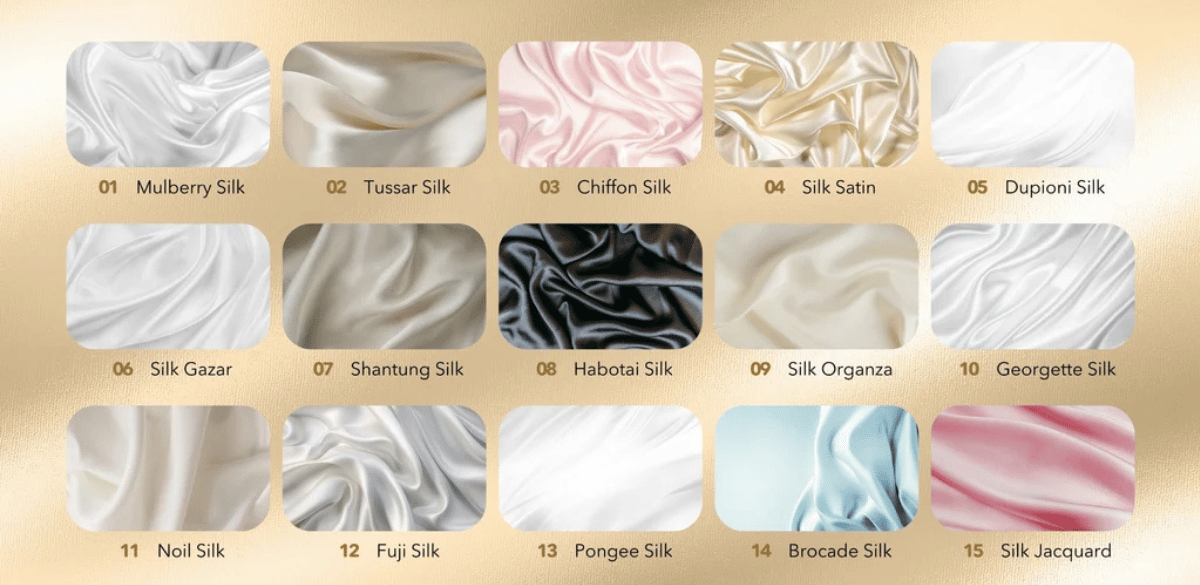
When learning about silk fabrics, you will often see names based on the weave structure or surface characteristics of the fabric. Below are some of the most common types available on the market today.
Silk satin
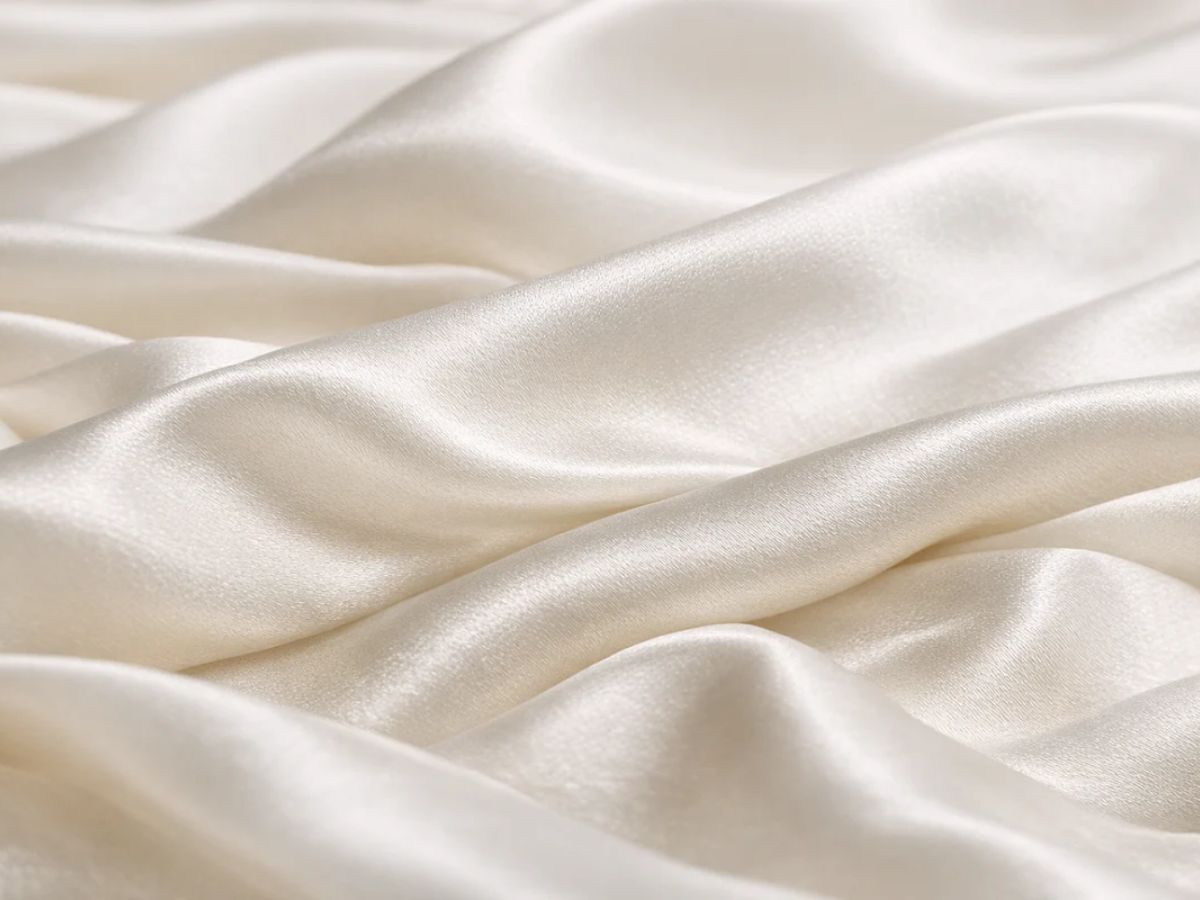
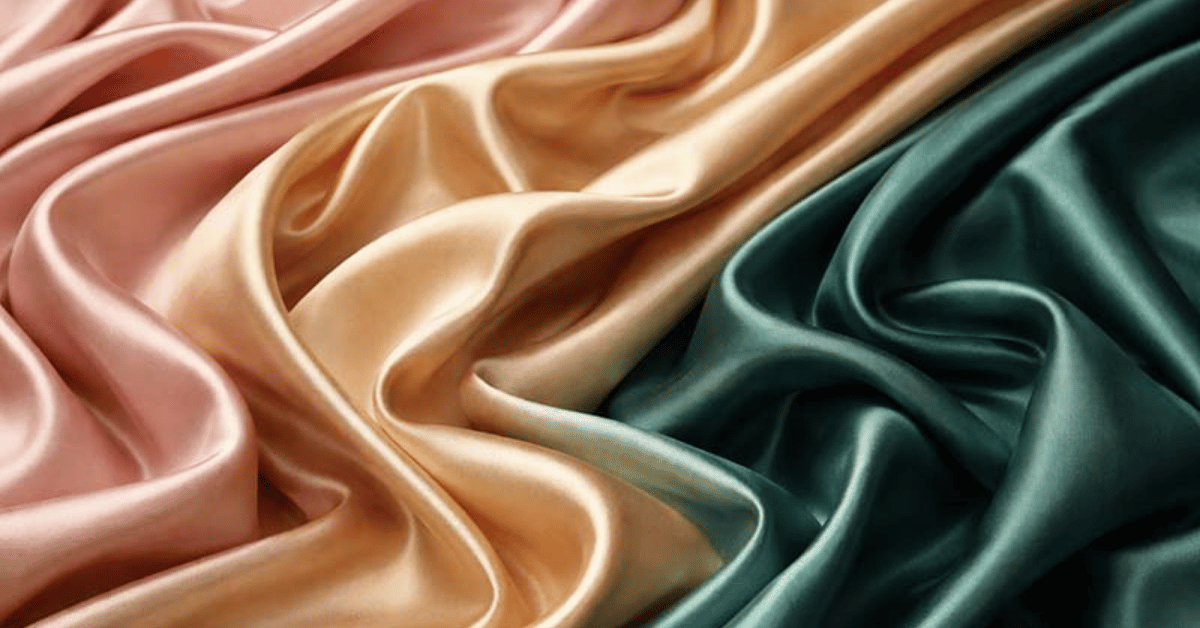
Silk satin is one of the easiest fabrics to recognize because of its smooth and relatively shiny surface.
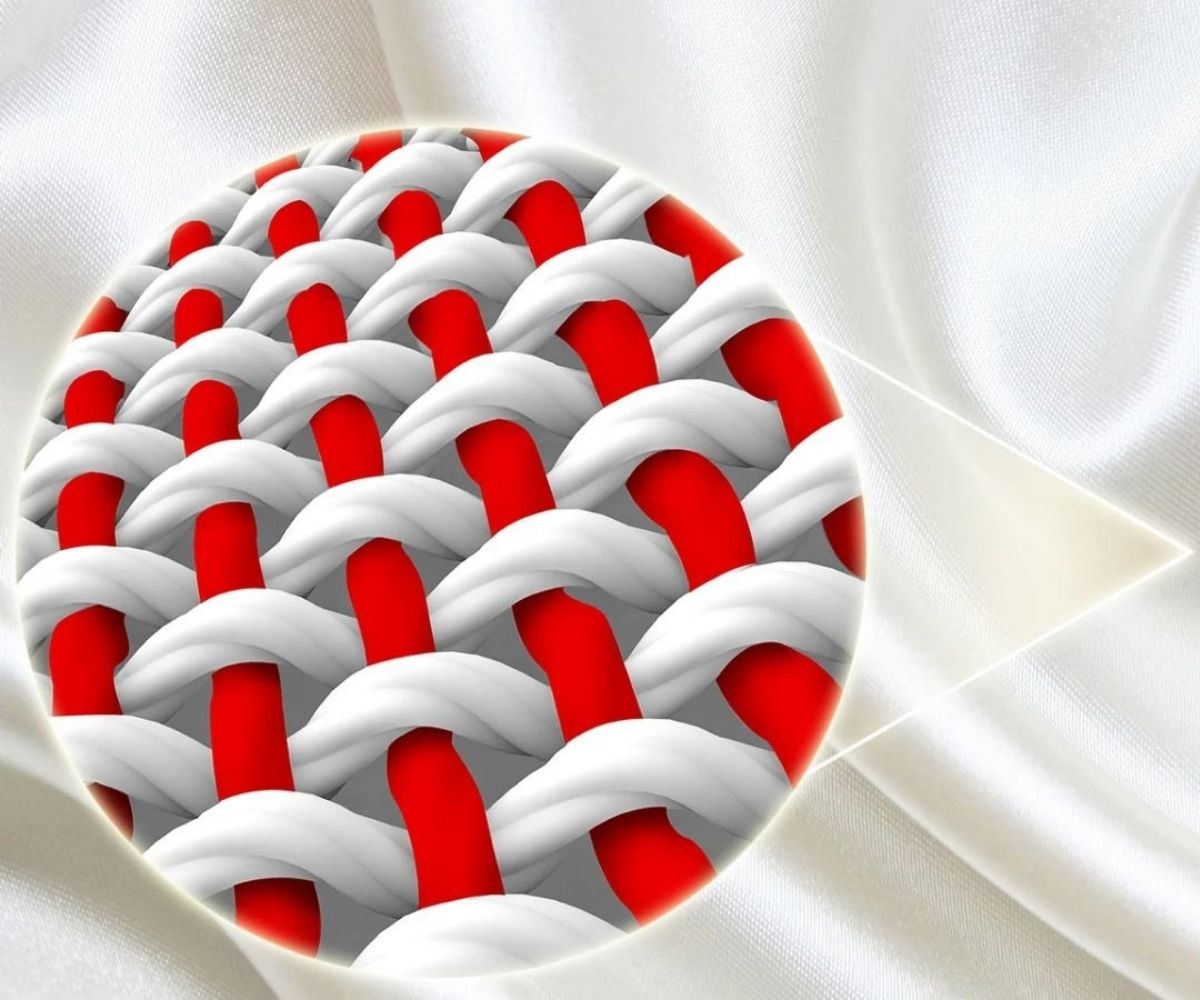
The main characteristic of satin comes from its weave structure. In a satin weave, the yarns have longer sections floating over the surface instead of crossing each other continuously.
Because of this structure, a larger surface area reflects light, creating a stronger shine. Satin is one of the three basic weave structures, together with plain weave and twill weave.
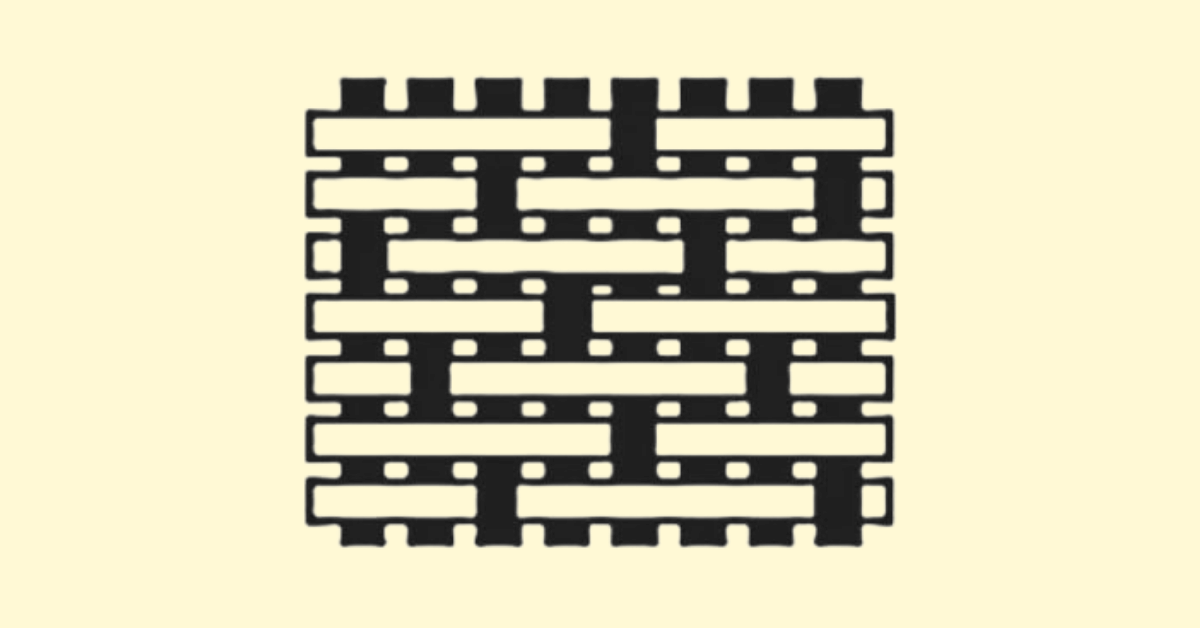
When silk is used as the fiber material, satin usually has a very smooth surface, good drape, and a soft feel.
It is often used for dresses, áo dài, shirts, scarves, sleepwear, and clothing that requires a smooth and elegant surface.
It is important to understand that satin does not automatically mean silk. Satin can also be made from polyester, viscose, or other fibers.
Therefore, if you want to buy pure silk satin, you should check the fiber composition instead of judging the fabric only by its shiny surface.
Habutai silk
Habutai, which can also be written as habotai, is a plain weave silk with a relatively simple structure.
The warp and weft yarns cross over and under each other alternately, creating a fairly even surface.
Habutai is usually lightweight, soft, and moderately shiny. Compared with satin, its shine is softer because the plain weave structure creates more crossing points between the warp and weft yarns.
This fabric is suitable for lightweight shirts, garment linings, scarves, and products that need a light layer of fabric. Some heavier habutai fabrics can also be used for outer clothing.
The main advantage of habutai is its balance between softness and surface stability. It is also suitable for people who enjoy the feel of silk but do not want a surface that is as shiny as satin.
Crepe silk
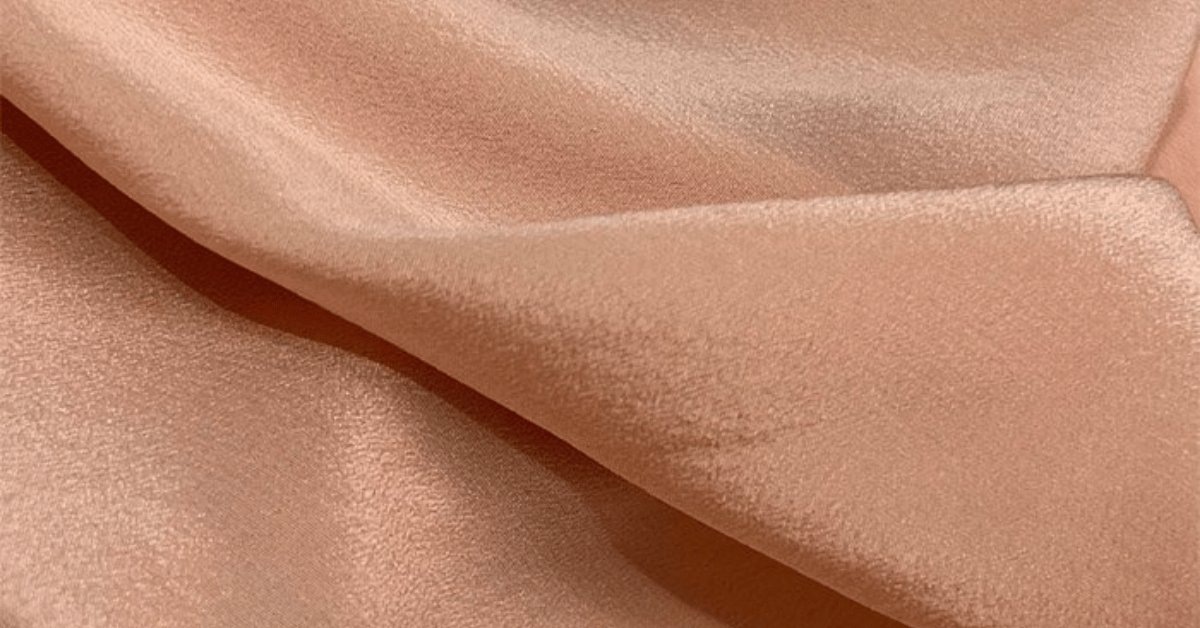
Crepe silk is known for its slightly rough or lightly textured surface instead of being completely smooth.
This texture is usually created by using highly twisted yarns or suitable weaving techniques. The yarn twist creates a slightly uneven surface and gives crepe a more matte appearance than satin.
Crepe silk usually has good drape but reflects less light. Because of this, clothing made from crepe often looks elegant and soft without appearing too shiny.
It is commonly used for dresses, blouses, scarves, and clothing that requires natural drape.
The small textures on the surface can also help make wrinkles less noticeable compared with some smoother silk fabrics.
Twill silk
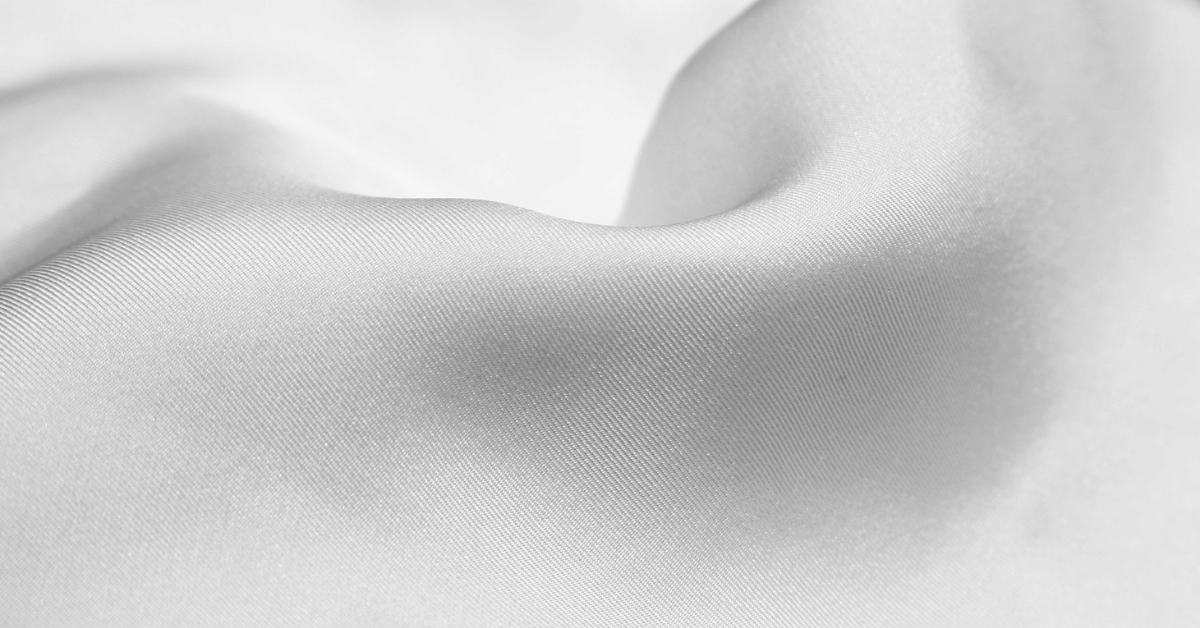
Twill silk can be recognized by the diagonal lines on its surface.
These lines are created by the twill weave structure, where the warp and weft yarns cross each other following a repeating pattern that creates continuous diagonal lines.
Compared with plain weave silk, twill usually feels stronger and has a more visible surface structure. However, the fabric can still remain soft and drapey when fine silk fibers are used.
Because of its stronger structure, twill silk is commonly used for silk scarves, ties, shirts, dresses, and clothing that needs to hold its shape better than satin.
When looking closely at the fabric, you can often see diagonal lines. This is one of the simplest ways to distinguish twill silk from satin or plain weave silk.
Organza silk
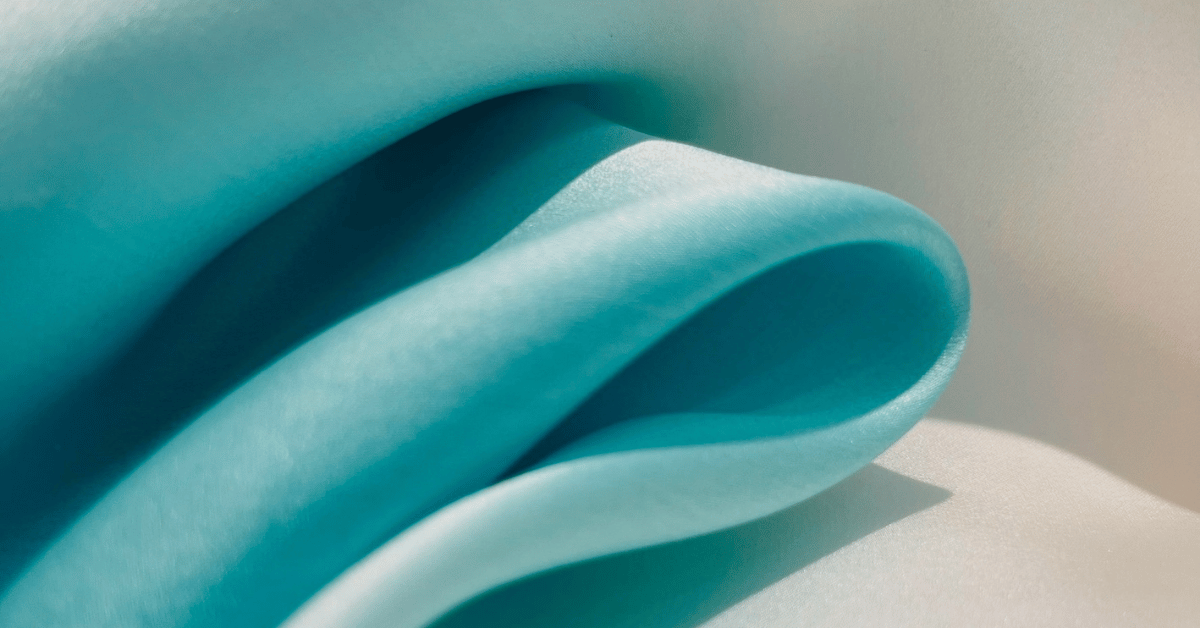
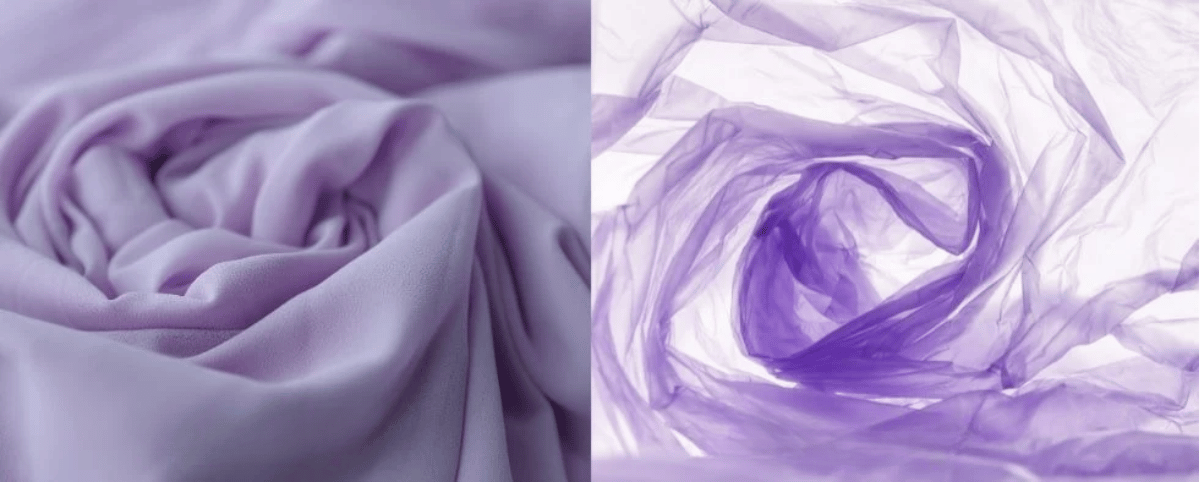
Organza is a thin, lightweight, and slightly transparent fabric with a relatively stiff structure.
Traditional organza can be made from silk, while many modern products are made from polyester or nylon.
One of the main differences between organza and chiffon is how well they hold their shape.
Chiffon is soft and has more drape, while organza is stiffer and more structured. This allows organza to help clothing maintain its shape and create more volume.
Because of these characteristics, organza is commonly used for wedding dresses, evening dresses, puff sleeves, dress overlays, and decorative details that need to keep their shape.
Chiffon silk
Chiffon is a very lightweight, thin, and transparent fabric.
It is usually made with a plain weave structure using highly twisted yarns. This creates a slightly textured surface instead of the smooth and shiny surface of satin.
Silk chiffon has good drape, feels lightweight, and creates soft movement when worn. Because chiffon is quite transparent, many designs require an additional lining underneath.
Chiffon is commonly used for dresses, blouses, scarves, lightweight outer layers, and decorative overlays.
Similar to satin and organza, chiffon can now be made from many different fibers. Therefore, the word chiffon only describes part of the fabric’s characteristics.
To know whether a chiffon fabric is made from silk, buyers should still check the fiber composition.
Taffeta silk
Taffeta silk has a relatively smooth surface, a firm structure, and good shape retention.
Compared with satin or chiffon, taffeta has less drape, so it can create a clearer shape and help clothing maintain its form.
Taffeta usually uses a plain weave structure, where the warp and weft yarns cross evenly. The way the yarns are arranged and twisted gives the fabric a firm structure and helps it hold its shape.
When touching taffeta, you can usually feel that it is crisper and stiffer than satin or habutai. Some types of taffeta also make a light rustling sound when they move.
Taffeta is suitable for evening dresses, full skirts, lightweight jackets, and designs that need to maintain their shape.
Today, taffeta is also made from polyester and many other fibers. Therefore, taffeta made from natural silk is usually more expensive than versions made from synthetic fibers.
Jacquard silk
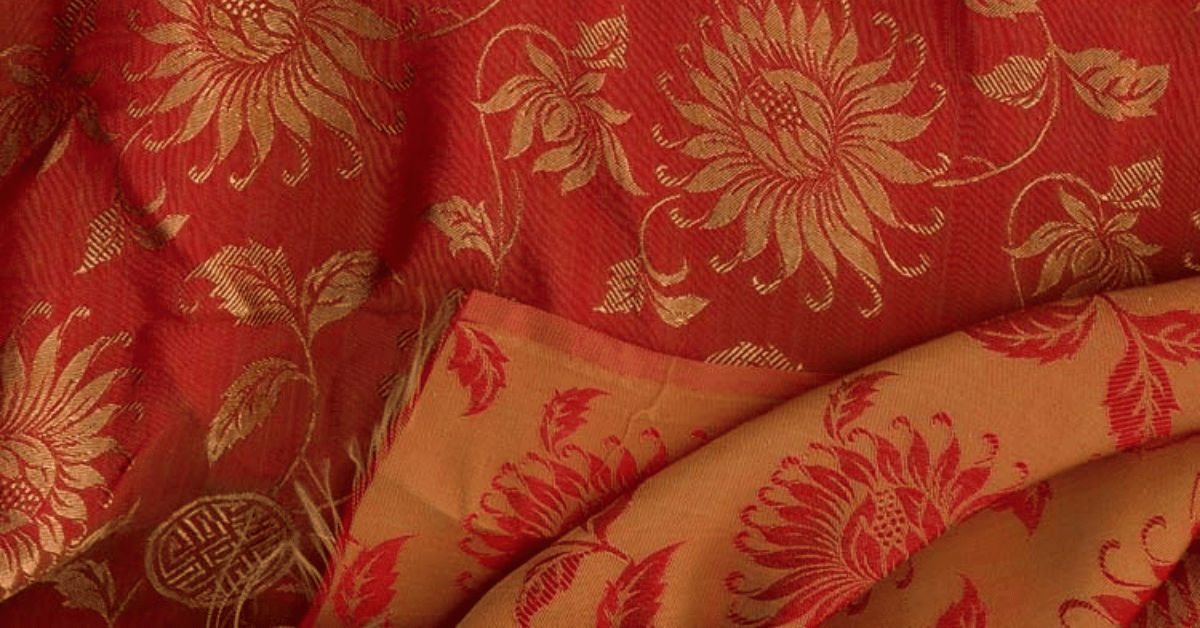
Jacquard fabric can be recognized by its detailed patterns, which are woven directly into the fabric structure instead of being printed or embroidered after the fabric is finished. The patterns are often highly detailed and create a visible difference between the background and the decorative areas.
The main feature of this fabric comes from its weaving technique. During production, individual warp yarns can be controlled separately to create different patterns such as flowers, geometric shapes, and other decorative designs. Jacquard can combine several basic weave structures, including plain weave, twill, and satin, to create different surface effects.
When silk is used, jacquard fabric usually has a soft surface, natural shine, and patterns that appear differently depending on the angle of the light. It is commonly used for áo dài, dresses, jackets, scarves, accessories, and clothing where decorative patterns are an important part of the design.
Silk brocade can be considered a decorative form of jacquard. Its patterns are usually more visible against the fabric background and the material often feels firmer.
When woven from silk, brocade has a natural shine and creates a clear sense of depth between the background and the patterns.
Because of its decorative appearance and relatively good shape retention, silk brocade is often used for áo dài, traditional clothing, formal clothing, and decorative products.
What makes Vietnamese silk different?
Vietnamese silk has a long history connected with mulberry farming, silkworm raising, silk reeling, and weaving. Many places such as Vạn Phúc, Nha Xá, and Bảo Lộc have developed traditional silk villages and their own silk production areas.
The value of Vietnamese silk comes from several factors, including the raw materials, fiber processing methods, weaving techniques, and skills passed down through many generations. From natural silk fibers, Vietnamese artisans have developed many types of fabric with different surfaces and uses.
Silk brocade is one example. Its patterns are usually created directly during the weaving process, making the patterns part of the fabric structure. When silk fibers are used, brocade has a natural shine and creates a clear contrast between the background and the patterns.
Because of its relatively firm structure and high visual value, brocade is often used for áo dài, traditional clothing, accessories, and decorative products.

Besides brocade, silk noil fabric shows another side of natural silk. While satin silk is usually soft, smooth, and shiny, silk noil has a more matte and slightly rough surface. It also has small natural irregularities in the yarn.
Silk noil is often made from shorter silk fibers or fibers that are spun into yarn before weaving. Because of this, its surface looks more natural and rustic compared with silk fabrics made from long filament fibers. According to FAO, spun silk and silk noil made from shorter silk fibers usually have less shine and a rougher surface than fabrics woven from long silk filaments.
The variety of fabrics such as brocade, silk noil, and other types of silk allows Vietnamese silk to be used in many ways, from traditional clothing to modern fashion.
Each product also has its own character based on natural materials, weaving techniques, and the traditions of different silk producing regions.
How to identify different types of silk fabric
It is easier to identify different silk fabrics by looking at several characteristics together, including softness, drape, shine, weight, and surface structure.
Looking only at color is usually not enough because the same type of fabric can be dyed in many different ways.
Differences in softness and drape
If softness and drape are the main priorities, satin and chiffon are usually easy to recognize.
Satin silk is soft, smooth, and follows the curves of the body quite clearly. Because the surface is smooth, it often feels slightly slippery when touched.
Chiffon also has good drape, but it is lighter and has a slightly textured surface. When allowed to fall naturally, chiffon creates a lighter and more flowing movement than satin.
Habutai is soft but has more stability than chiffon.
Crepe has good drape but a less smooth surface.
Twill usually feels firmer, while organza and taffeta are more structured and have less drape.
For soft and fitted designs, satin or crepe are often suitable choices. For a light and flowing effect, chiffon is easier to use. If the design needs to hold its shape, organza and taffeta are usually more suitable.
Differences in surface shine
Shine is one of the most common characteristics used to identify silk.
Satin usually has the strongest shine among common silk fabrics because its weave structure creates longer yarn floats on the surface. When light reaches these areas, it is reflected more evenly.
Habutai has a softer and more natural shine.
Twill can also reflect light, but it usually has visible diagonal lines.
Crepe and chiffon tend to look more matte because of their twisted yarns and textured surfaces.
Silk noil usually has even less shine, giving it an appearance that can look closer to linen or cotton from a distance.
However, shine alone cannot tell you whether a fabric is pure silk. Many polyester satin fabrics can have an even stronger shine than natural silk. Buyers should combine visual inspection with the information on the fiber composition label and information from the manufacturer.
Differences in thickness and weight
Among common silk fabrics, chiffon and organza are usually some of the lightest and thinnest.
Chiffon is very lightweight and soft, while organza is also thin but has a more structured feel.
Habutai is available in different thicknesses, but it generally belongs to the lightweight fabric group.
Satin can also be produced in different weights. Lightweight satin is suitable for soft shirts and dresses, while heavier satin is often used for dresses, áo dài, and products that need more structure.
Twill usually feels firmer when held.
Taffeta is relatively lightweight, but because of its stiff structure, it can feel thicker and more structured.
The weight of silk noil can vary depending on how the yarn is spun and how densely the fabric is woven. Its surface may look thicker and rougher than filament silk even when its actual weight is not very high.
Differences in weave and yarn structure
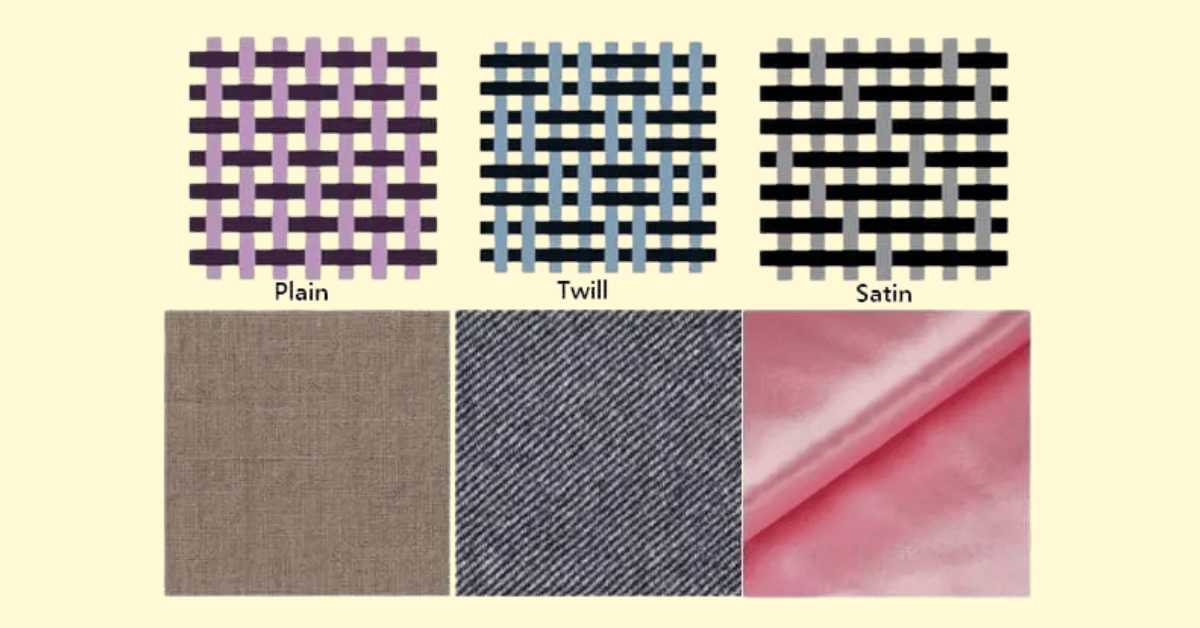
From a technical point of view, the three basic weave structures are plain weave, twill weave, and satin weave.
Plain weave has a simple structure where the warp and weft yarns alternately cross over and under each other. Habutai, organza, and taffeta commonly use this structure, although their final characteristics can be very different because of the type of yarn, yarn twist, and weaving density.
Twill weave creates characteristic diagonal lines. This is the main feature used to identify twill silk.
Satin weave uses longer yarn floats, creating a smoother and shinier surface. This structure is commonly used for satin silk.
Crepe and chiffon are strongly affected by yarn twist. Highly twisted yarns create a textured surface and reduce the amount of shine.
More complex structures such as jacquard can create patterns directly during the weaving process. These techniques are often used for brocade and patterned silk fabrics.
What is the difference between pure silk and blended silk?
Pure silk fabric is woven from natural silk fibers, while blended silk combines silk with other fibers such as polyester, viscose, or cotton.
As weaving and finishing technologies have improved, it has become more difficult to distinguish these fabrics only by looking at them.
Pure silk usually has a natural shine that changes depending on the angle of the light. It also has a soft surface and a characteristic feel.
The characteristics of blended fabrics depend on the type and percentage of fibers used in the blend.
If you want to learn more, you can read the article “What Is Silk? Everything You Need to Know About Its Origins, Properties, and How to Use” for more information about how to distinguish real silk from blended silk.
How to care for silk fabric
Silk is a natural protein fiber, so it requires more careful care than some synthetic fabrics.
Proper washing, drying, and storage can help reduce surface damage, fading, and changes in the shape of the fabric.
Besides checking the fiber composition, users should also read the care instructions for each product.
A satin silk shirt, a twill scarf, or a chiffon dress may use different dyes, linings, and accessories. Therefore, their cleaning requirements can also be different.
You can also read the article “How To Wash A Silk Scarf And Care For It?” to learn more about proper silk care.
Important notes when washing and cleaning silk
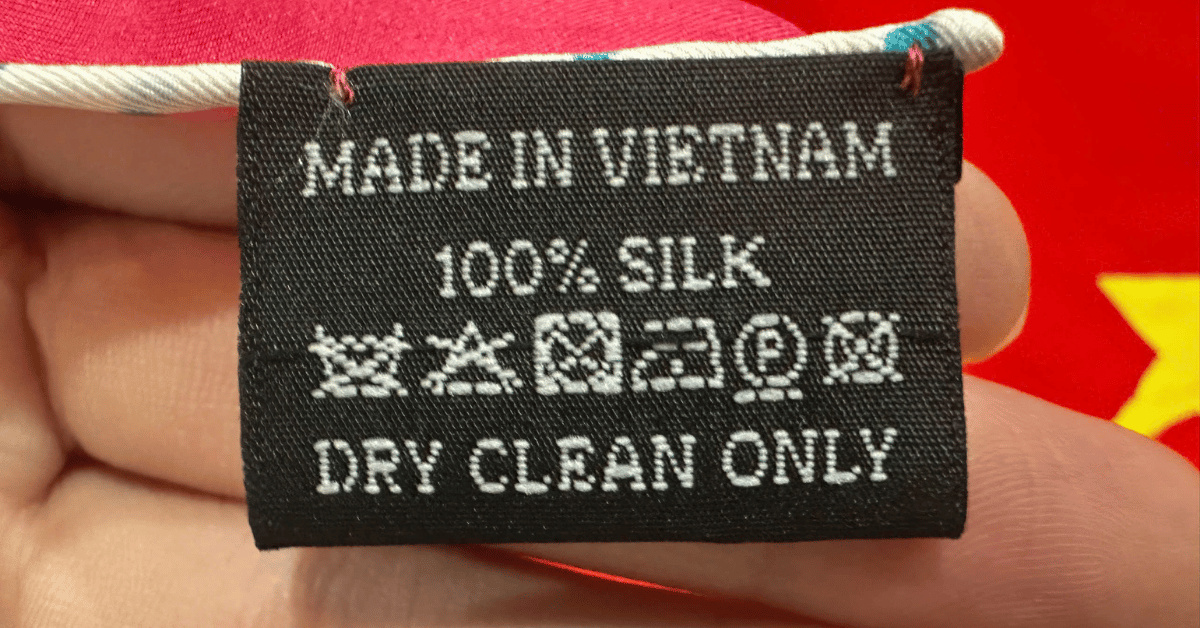
Before washing silk, always check the care label.
If the manufacturer recommends dry cleaning, you should follow the instructions instead of washing the product with water.
For products that can be hand washed, use cool or low temperature water together with a gentle detergent suitable for delicate fabrics.
Avoid soaking silk for too long because long exposure to water and detergent may affect the color or fabric structure.
Wash the fabric gently by hand. Do not rub strongly, scrub continuously, or twist the fabric to remove water. Strong physical pressure can damage the smooth surface or change the shape of the garment.
For difficult stains or expensive silk products, a safer option is to use a professional cleaning service that has experience working with silk.
How to dry and store silk
After washing, you can use a clean towel to absorb extra water instead of twisting the fabric. Then, lay the product flat or hang it in a well ventilated place depending on the structure of the garment.
Avoid leaving silk under direct sunlight for a long time.
Strong sunlight can affect the color and may cause the material to deteriorate more quickly.
When storing silk, keep it in a dry and well ventilated environment.
Garments that need to be hung can be placed on wide hangers to reduce pressure on the shoulders. Products that can easily lose their shape may be folded gently and stored in a clean drawer or wardrobe.
If silk products are stored for a long time, check them regularly to prevent moisture or insects from damaging the material.
What should you avoid to prevent damage?
High temperatures are one of the main things to be careful with when caring for silk.
When ironing silk, check the manufacturer’s instructions and use the appropriate temperature setting. If your iron has a silk setting, use that setting. Do not leave a very hot iron directly on the fabric surface for a long time.
For fabrics with a shiny surface such as satin, improper ironing can leave marks on the surface.
You should also avoid allowing perfume, cosmetics, strong detergents, or oxidizing chemicals to come into direct contact with silk.
If liquid is spilled on the product, it should be treated as soon as possible according to the care instructions.
For chiffon, organza, and other thin silk fabrics, avoid contact with sharp surfaces or accessories with sharp edges because the fibers can be pulled or scratched.
Conclusion
Each type of silk fabric has its own characteristics in terms of softness, shine, weight, and weave structure.
Satin silk is known for its smooth and shiny surface. Crepe silk has good drape and a lightly textured surface. Twill silk can be recognized by its diagonal lines, while organza and taffeta are suitable for designs that need to hold their shape.
Understanding these differences can help you identify different silk fabrics more easily and choose the right material for your needs.
With the aim of preserving the value of silk and bringing this material closer to modern life, MsKÉN focuses on products developed from the value of silk and traditional Vietnamese weaving.
In addition to its products, MsKÉN also shares information about the origin, characteristics, identification, and care of silk, helping customers understand the material better before choosing a product.
If you are learning about silk fabric or would like to explore products made from this material, you can visit MsKÉN’s articles and collections for more useful information.